
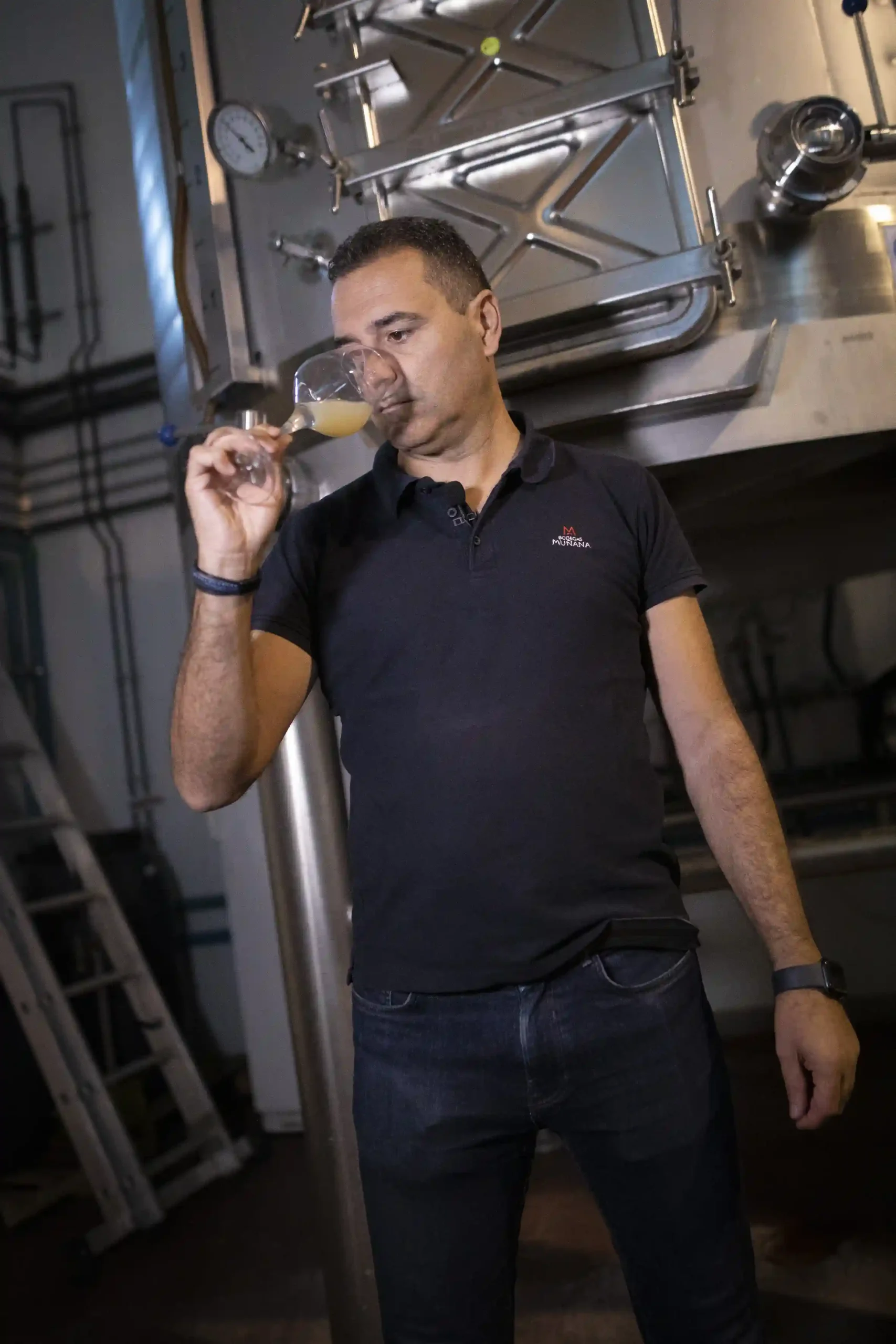
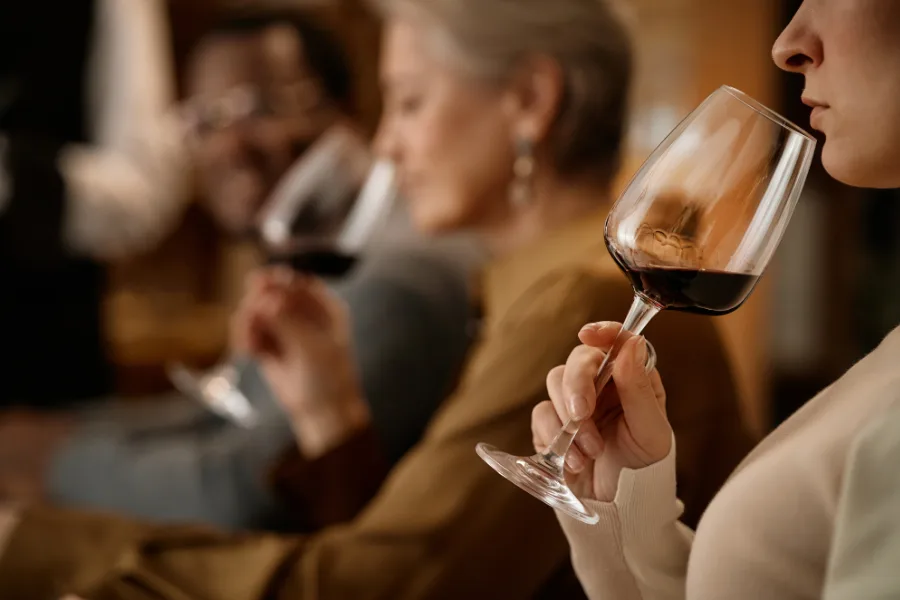
You're at a wine tasting and the sommelier says the wine has "ripe tannins, a long finish with terroir notes, and good structure with vibrant acidity." You nod with conviction, though inside you're mentally translating every word as if it were a foreign language.
The world of wine has its own vocabulary, and knowing it isn't a matter of snobbery: it's the difference between being able to accurately describe what you feel in the glass or simply saying "it's good." This glossary compiles the Terms most commonly used in professional and educational wine tasting, explained clearly, without unnecessary technical jargon and with practical examples.
Wine is one of the most complex food products in existence in terms of the number of aromatic and flavor compounds. More than 1,000 volatile compounds different in wine, many of which contribute to its aroma and flavor.
To communicate this complexity accurately—among winemakers, sommeliers, wine journalists, and wine enthusiasts—a common language has been developed that allows for precise descriptions of what is perceived in the glass. Learning it doesn't make you an expert, but it does allow you to participate more deeply and enjoyably in the wine experience.
The wine's fresh and lively sensation on the palate is primarily felt on the sides of the tongue. Well-integrated acidity makes the wine fresher, longer, and more suitable for food pairing. High-altitude wines, like those from Bodegas Muñana, generally have a higher and more preserved acidity than those from lower-altitude areas due to the cool nights of the Sierra Nevada mountains.
The year the grapes used to make the wine were harvested. A key piece of information for understanding the wine's climatic context. For more information, see our article on What is the vintage in wine?.
The aromas that come directly from the grape—fruits, flowers, herbs—are the most delicate and the first to be perceived in the glass. They are best preserved in wines from cool climates or high altitudes and are protected by harvesting at low temperatures.
Those that develop during alcoholic fermentation. They include notes of bread, yeast, dairy, and stewed fruit.
These aromas develop as the wine ages, both in barrels and bottles. They include notes of vanilla, cedar, tobacco, leather, earth, truffle, and dried fruit. These are the most complex aromas and those most valued by experienced wine enthusiasts.
The sensation of dryness and roughness in the mouth produced by tannins reacting with the proteins in saliva. A very astringent wine literally "dries out" the mouth. This is not necessarily a fault in a young, well-structured wine: with time and/or decanting, the astringency will decrease.
The main culprit is acetic acid, which in high concentrations gives wine a vinegary smell. In very small quantities, this is normal and can even add complexity. When it exceeds a certain threshold, it becomes a flaw of wine.
In tasting, alcohol is perceived as a warming sensation in the throat and at the back of the mouth. A well-balanced wine integrates the alcohol so that it doesn't stand out excessively; when the alcohol is prominent, the wine is described as "hot" or "fiery."
The breadth of the wine in the mouth: how much it occupies horizontally on the palate. A wine with breadth fills the entire mouth evenly; a wine with breadth is only perceived in the center or on the sides.
Strictly speaking, the olfactory sensation perceived before the wine is inhaled (directly through the nose). Do not confuse with bouquet, which is used for tertiary aging aromas, although in colloquial use both terms are used interchangeably.
In wine tasting, the analysis involves examining what is perceived once the wine is in the mouth: attack, evolution on the palate, and finish or aftertaste. This is one of the three classic phases of tasting, along with the visual and olfactory phases. To understand how a complete tasting is structured, see our article on... phases of a wine tasting.
The complex aromas that a wine develops with aging, especially in the bottle. The bouquet of a Gran Reserva can include notes of cedar, tobacco, leather, damp earth, truffle, and spices that were not present in the young wine.
A tasting method in which the wine's identity is unknown (hidden bottle). This eliminates bias and allows for a more objective evaluation. It is the most rigorous format for assessing a wine's true quality.
When a wine "smells like cork," it is due to the presence of a compound called cork. TCA (tricloroanisol)This is caused by the interaction of certain bacteria with the chlorine in the cork. The aroma is damp, like wet cardboard or a cellar. A "corked" wine is a serious and irreversible defect that affects a small proportion of bottles with natural corks (between 1 and 3%).
The wine aging process, which can take place in oak barrels, in bottles, or both. It is also a legal category in Spain that implies a minimum aging time. For more details, see our article on Differences between crianza, reserva and gran reserva.
The sensation of weight or density of the wine in the mouth, related primarily to alcohol, tannins, and dry extract. It is described on a scale: light, medium, or full-bodied. A Beaujolais is light; a reserve Cabernet Sauvignon is full-bodied.
The process of transferring wine from its bottle to a decanter to oxygenate it and/or separate the sediment. Essential for aged wines that are closed and very old wines with sediment. See our guide on How to decant wine.
Solid particles that form naturally in wine during bottle aging, especially in long-aged reds. These are tannins and pigments that precipitate over time. It's not a defect; it's a sign of natural aging without aggressive filtration.
The harmony between all the components of the wine: acidity, alcohol, tannins, fruit, sweetness. A balanced wine is one in which no single element stands out in a disruptive way over the others. It is one of the most valued criteria in quality assessment.
The internal architecture of wine: the combination of acidity, tannins, and alcohol that gives it structure and form. A wine with good structure can age well; a wine without structure quickly "falls apart" in the glass and over time.
What remains in the mouth and throat after swallowing the wine. It is measured in flow rates: time units of approximately one second. A quality wine has a long finish (more than 8-10 seconds); a simple wine has a short finish. The length of the aftertaste is one of the most objective indicators of quality.
Generic descriptor for the aromas and flavors of fruit in wine. It is subdivided into red fruit (cherry, strawberry, raspberry, pomegranate), black fruit (blackberry, plum, blackcurrant), tropical fruit (mango, pineapple, passion fruit), stone fruit (peach, apricot, yellow plum), and dried fruit (fig, date, raisin).
A compound produced during fermentation that contributes smoothness and a creamy mouthfeel to wine. A wine with a high glycerol content has a silkier, less sharp texture. It contributes to the sensation of "roundness."
The trails left by the wine as it runs down the sides of the glass after swirling. Popularly associated with quality, but in reality, they are primarily an indicator of... alcohol and glycerol content of wine: the more alcohol and glycerol, the more pronounced and slower the tears.
See "Finish." A wine with a long finish is one whose presence lingers in the mouth long after swallowing. It is one of the main indicators of quality in great wines.
The remains of dead yeast and other particles that settle at the bottom of the tank or barrel after fermentation. The wine's contact with its own lees during aging (on leesIt contributes creaminess, complexity, and notes of bread, yeast, and nuts. It is especially important in the production of aged white wines and quality sparkling wines.
The process of contact between the must and the solid parts of the grape (skins, seeds, stems). During maceration, color, tannins, aromas, and phenolic compounds are extracted from the skins. The duration and temperature of maceration determine the intensity and profile of the resulting wine.
Grape juice before alcoholic fermentation begins or ends. Once the yeasts have transformed the sugars into alcohol, the must becomes wine.
This descriptor refers to the mineral notes in wine: flint, chalk, slate, graphite, iodine, salt. It is one of the most debated descriptors in winemaking because there is no scientific consensus on exactly which compounds produce it, but it is widely recognized by tasters as a real and valuable dimension in great wines. High-altitude wines with complex soils tend to exhibit a more pronounced minerality.
In wine tasting terminology, the "nose" of a wine refers to the array of aromas perceived when smelling it before drinking. A "wine with a good nose" is one with a rich and complex aromatic expression.
The process by which wine deteriorates due to excessive contact with oxygen outside of a controlled environment. An oxidized wine exhibits orange or brown hues, aromas of oxidized apple or vinegar, and a loss of aromatic freshness. This differs from controlled micro-oxygenation in barrels, which is beneficial.
See "Finish." The persistence or length of the aftertaste is the impression that the wine leaves on the palate after being swallowed.
A positive descriptor indicating a balanced wine, without harsh edges or elements that stand out in a disturbing way. Soft tannins, well-integrated acidity, and discreet alcohol contribute to the wine's "roundness."
See "Finish." The aftertaste or finish It's the sensation that lingers in the mouth and throat after swallowing the wine. It can be fruity, spicy, mineral, toasty… Higher quality wines have complex, long, and pleasant aftertastes.
Sulfur compounds (primarily SO₂) are present in all wines as a natural or added preservative and antioxidant. For a full explanation, see our article on What are sulfites in wine?.
Phenolic compounds found primarily in the skins, seeds, and stems of grapes, and also in oak barrels. On the palate, they produce a sensation of dryness and astringency. They are fundamental to the structure of red wines and one of the factors that determine their aging potential. Tannins evolve over time and with the micro-oxygenation of the barrel, becoming softer and smoother.
A French concept encompassing all the natural factors of a wine's place of origin: soil, climate, altitude, orientation, biodiversity… For a complete explanation, see our article on What is wine terroir?.
The fidelity of a wine to the expected profile of its variety, region, or appellation of origin. A Tempranillo with "good typicity" is one that clearly displays the characteristic traits of the variety: cherry, raspberry, fresh acidity, and soft tannins.
Descriptor indicating a dense, oily, and silky texture on the palate, similar to that of oil or butter. Common in white wines aged in oak barrels on their lees.batoning) and in very ripe and concentrated red wines.
This refers to a wine made from a single grape variety (monovarietal). It also describes the aromas and flavors typical of that variety. A "Syrah with clear varietal expression" is one where the characteristic notes of violet, pepper, and dark fruit of Syrah are clearly recognizable.
This descriptor, in red wines, can be positive (mild green bell pepper, fresh herbs) or negative (excessive green grass, cooked pea) depending on its intensity and context. In Cabernet Sauvignon, a slight vegetal note (green bell pepper) is typical and considered positive; when it dominates the overall impression, it becomes a fault.
See "Volatile Acidity". In wine tasting terminology, "volatile" refers to the perceptible presence of acetic acid (vinegar) in wine, which is a defect when it exceeds the thresholds of perception.
The sensation of fullness and breadth of the wine in the mouth. A wine with volume "fills" the mouth satisfactorily; a wine without volume is perceived as thin or watery. Related to body but not identical: body refers to weight, volume to breadth.
Beyond tasting, there are technical production terms that frequently appear in technical sheets and winery descriptions:
Assembly / Cutting: Blending wines from different varieties, vineyards, or vintages to create the final wine. A fundamental art of the winemaker
Batoning: Periodic stirring of the lees in the barrel to increase the creaminess and complexity of the wine, especially in white wines
Clarification / Collage: Process of removing suspended particles from wine using clarifying agents (egg white, bentonite, fish gelatin…)
Malolactic fermentation (MLF): The transformation of malic acid (more aggressive) into lactic acid (milder) by bacterial action. This softens the acidity and imparts dairy notes. Common in red wines; in white wines, it is used selectively.
Carbonic maceration: Fermentation technique in which whole grapes ferment in a CO₂ environment. It produces very fruity, light, and easy-drinking wines (typical of Beaujolais).
Pigeage: Techniques for mixing the cap (the skins that float on top of the fermenting must) with the liquid, promoting the extraction of color and tannins. Pumping over pumps must from below; piggy bank It is the manual or mechanical sinking of the hat
Transfer: The process of transferring wine from one container to another, leaving the sediment behind. This is done several times during aging.
Vintage: The grape harvest. One of the most critical moments of the winegrowing year. See our article on night harvest to understand why the timing and conditions of the grape harvest are crucial
The visual phase of the tasting analyzes the color, intensity, clarity, and fluidity of the wine:
Bright: Clean, clear wine with bright reflections in the glass
Covered / Opaque: Wine of very intense color, especially in young red wines of high extraction.
Granate: Dark red color with violet undertones; common in young and recently aged red wines
Ruby: Lighter and brighter red hue; typical of young red wines or varieties with lower extraction.
Tile / Ochre: Orange or brown tones that appear in red wines with prolonged aging or in the oldest wines
Pajizo: Light yellow with greenish reflections; typical of young, unaged white wines
Dorado: Intense yellow with golden highlights; white wines aged in oak barrels or from warmer climates
Add: Very intense yellow tending towards brown; very old white wines or fortified wines
Wine tasting vocabulary isn't an end in itself; it's a tool to better communicate what you perceive in the glass. There's no need to use every term or force descriptors you don't actually know. The best tasting is the honest one: describing what you feel, with the words you have, without pretending to perceive what you don't.
That said, the more concepts you understand, the more nuances you'll be able to detect. The brain tends to perceive better what it has a name for: if you know the word "minerality," you'll begin to identify that cup-like dimension you previously overlooked.
If you want to practice these concepts in a guided environment, our wine tourism visit in Granada It includes a tasting of Bodegas Muñana wines with all the vocabulary put into practice. And if you prefer to do it at home, our article on How to organize a wine tasting at home It gives you all the keys to assemble it correctly and enjoy it to the fullest.
Learning to talk about wine isn't elitism; it's expanding your enjoyment. When you can name what you feel, you feel it more fully. When you can describe why you like a wine, you can seek out others you like for the same reasons, share that appreciation with others, and build a relationship with wine that goes beyond casual consumption.
This glossary is a starting point, not a definitive manual. The vocabulary of wine grows with every bottle you open, every tasting you do, and every conversation you have about what's in your glass. Use it with curiosity, honesty, and above all, pleasure.
 Spanish Spanish
 English
 Chinese
Puedes realizar tus pedidos con normalidad hasta el 31 de julio.
Durante estas fechas no será posible tramitar pedidos. Volveremos a estar operativos el 16 de agosto.