



Walking into a wine shop or opening a wine list and encountering terms like "crianza," "reserva," or "gran reserva" can be intimidating if you don't know what they mean. And yet, these words aren't just marketing: they are legally regulated categories in Spain These labels indicate how long a wine has aged and under what conditions. Understanding them will help you choose better and know what to expect in each glass.
The key to everything is time: the time the wine spends in oak barrels and the additional time it rests in the bottle before being released to the market. More time doesn't always mean better wine, but it does mean a radically different flavor profile.
Before discussing breeding and reserves, we need to understand what a young wine (sometimes also called "wine of the year" or simply without an aging designation).
A young wine is one that has not been aged in oak barrels—or has done so very briefly—and is bottled and sold in the same year as the harvest or shortly thereafter. Its profile is:
Primary aromas: Fresh fruit, flowers, herbs, citrus or red fruit notes depending on the variety
Flavor: Fresh, vibrant, with present acidity and soft or almost imperceptible tannins
Ideal for: Ready to eat, pairs well with light dishes, tapas, fish, and rice dishes
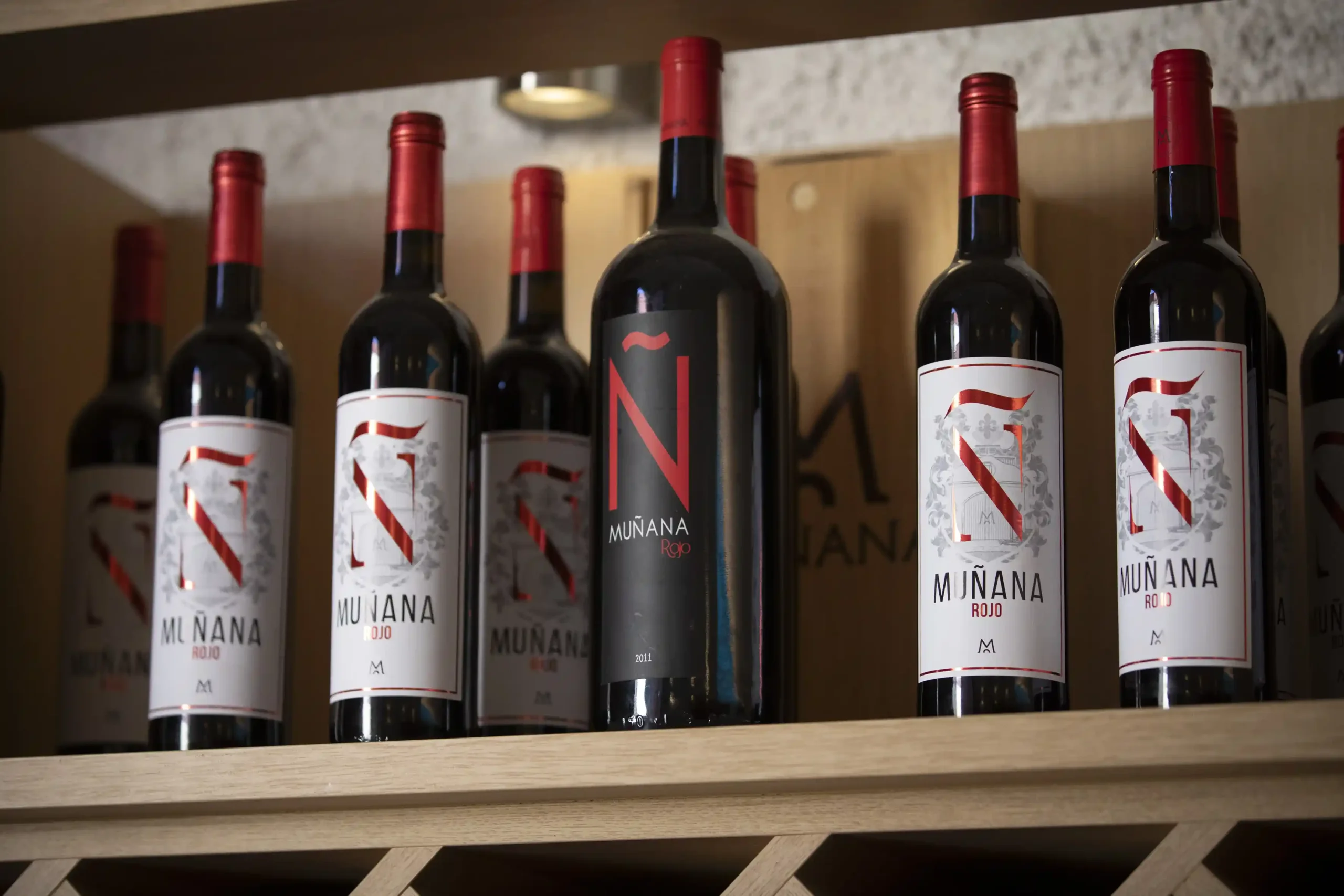
He Muñana Red or the Muñana Rosé They are perfect examples of wines designed to be enjoyed for their freshness and pure fruit, without the oak aging that would change their natural character.
In Spain, the regulations state that a red wine with the designation "Crianza" must comply with:
Minimum 24 months of total aging, of which at least 6 months in oak barrels
For white and rosé wines: minimum 18 monthswith at least 6 months in oak barrels
(Note: Some designations of origin have their own requirements that are more stringent than the national minimums.)
The oak barrel is not simply a container: it is a reactor of slow transformation. During the months the wine spends in it, two key processes occur:
Microoxygenation: Oxygen penetrates through the pores of the wood in a controlled manner, softening the tannins and providing stability and roundness.
Transfer of wood compounds: Oak contributes vanillin (vanilla notes), ellagic tannins (softer than those of the grape), and depending on the type of oak, notes of coconut (American oak) or spices and toast (French oak).
Secondary aromas: Ripe fruit (no longer as fresh as the young one), vanilla, sweet spices, light toasting
Flavor: Rounder than the younger one, with integrated tannins, medium body, present but softened acidity
Aftertaste: The wood appears, subtle but recognizable
Ideal for: Roast meats, cured sausages, rice dishes with meat, medium-high flavor dishes
And Reserva red wine must comply with:
Minimum 36 months of total aging, of which at least 12 months in oak barrels
For white and rosé Reserva: minimum 24 monthswith at least 6 months in oak barrels
The additional time in barrel and bottle profoundly transforms the wine. The primary fruit practically disappears or integrates into more complex aromas; the so-called tertiary or bouquet aromaswhich are the result of the slow chemical evolution of the wine with oxygen and wood compounds:
Leather, tobacco, damp earth: The wine begins to show its "age" in an elegant way.
Stewed fruit or jam: Fresh fruit is evolving towards warmer and deeper notes
Spices from the barrel: Clove, cinnamon, black pepper, with greater intensity than in the aged wine
Mature tannins: Completely integrated, almost silky in the best examples
Aromatic complexity: High; the wine tells a story on the nose that requires time and attention
Flavor: Full-bodied, with a notable body, silky tannins, balanced acidity and a long, spicy finish
Ideal for: Quality red meats, game, hearty stews, aged cheeses, celebratory dishes
And Gran Reserva red wine must comply with:
Minimum 60 months of total aging (5 years), of which at least 18 months in oak barrels
For Gran Reserva white and rosé whites: minimum 48 monthswith at least 6 months in oak barrels
A Gran Reserva is not produced every year. Wineries only produce it in certain vintages. exceptional vintagesWhen the grapes reach a quality sufficient to withstand and benefit from such prolonged aging, it is, in that sense, a declaration that that harvest was extraordinary.
After 5 or more years of aging, the wine has undergone a radical transformation:
The tannins, which in freshly harvested grapes are harsh and astringent, have polymerized and softened until they have become almost impalpable.
The fruity aromas have completely given way to the tertiary aromas: truffle, leather, blond tobacco, dark chocolate, mushrooms, earth
The color has evolved from bright ruby red to garnet tones with tile or orange highlights at the rim
The texture in the mouth is dense yet fluid, with an aftertaste that can last for minutes.
Aromas: Completely tertiary; a complex bouquet where each inhalation reveals something new.
Flavor: Opulent, profound, with a perfectly integrated structure
Aftertaste: Very long; wine "speaks" long after you swallow it.
Ideal for: Special occasions, haute cuisine dishes, game, and very mature cheeses
Not all barrels are the same, and the type of oak is a crucial decision by the winemaker that shapes the character of the aged wine:
American oak (Quercus alba): With a more open grain, it releases its compounds more quickly. It imparts intense notes of vanilla, coconut, fresh wood, and a distinctive sweetness. It is the traditional oak of classic Rioja.
French oak (Quercus petraea / Quercus sessilis): Finer grain, slower and more subtle release. It contributes delicate spices, elegant toasty notes, and a more discreet integration with the wine. Favored by the new wave of quality wineries
Hungarian or Eastern European oak: An intermediate option, with good value for money and increasingly valued results
At Bodegas Muñana we use the most suitable wood selection for each wine in the 1188 range, always seeking that the barrel completely uncovered the identity of the grapes grown in our vineyards in Sierra Nevada.
This is perhaps the most important question, and the answer is not necessarilyProlonged aging only adds quality if:
The starting grapes have sufficient quality and concentration to withstand it
The vintage (the climatic conditions of that year) was good
The winemaker has made the right decisions during the production and aging process.
A wine made from mediocre grapes and aged for a long time simply becomes a mediocre old wine. That's why great Crianza, Reserva, and Gran Reserva wines always begin in the vineyard. As we explained in our article on What is wine terroir?The quality of origin is the irreplaceable foundation of any great aged wine.
That said, a young wine is not "inferior" to a reserva either: it's simply a different wine, designed for a different moment and a different kind of enjoyment. The vibrant freshness of a good young wine from a high altitude can be just as exciting as the complexity of a 10-year-old gran reserva.
A common question is whether the wine you have at home is at its "peak" for drinking. Here are some guidelines:
Young: The sooner the better. It doesn't improve with age; it loses its freshness.
Breeding: Excellent between 2 and 5 years after harvest; can last somewhat longer in good storage
Reservation: Their optimal window is usually between 4 and 8 years after the harvest, although the best ones last 10-12.
Gran Reserva: It may take several additional bottle years after purchase to fully integrate; your window can extend to 15-20 years in the best cases
To learn more about how to properly store these wines at home until you open them, we recommend our article on how to store wine at home.

At Bodegas Muñana we produce aged wines under the range 1188, a name that refers to the altitude of our vineyards in the Sierra Nevada mountains. This exceptional altitude gives our aged wines a characteristic that sets them apart from most Spanish Crianza wines: They retain their freshness and natural acidity even after aging in oak barrels, which makes them more elegant, tighter, and with a greater capacity for evolution in the bottle.
Muñana 1188 Cabernet Sauvignon: The structure and tannins of Cabernet find in the barrel a perfect ally to soften without losing their mountain power
Muñana 1188 Syrah: The violet, pepper, and black fruit notes of high-altitude Syrah gain depth and complexity with aging.
Muñana 1188 Tempranillo: The most Spanish variety takes on a different dimension when grown at high altitude: fresher, more acidic, and with an elegance that few areas of Spain can offer.
If you want to discover firsthand how the terroir of Sierra Nevada transforms the aging of these wines, we invite you to a Visit our winery in Granadawhere you can see the barrels, learn about the process and taste each level of our range.
The next time you see "crianza," "reserva," or "gran reserva" on a bottle, you'll know what lies behind it: years of patience, the winemaker's decisions, the choice of oak, and, above all, the quality of the grapes. Those words on the label summarize a process that can last up to five years before the wine reaches your glass.
Choose according to the moment: the freshness of a young wine for everyday tapas, the roundness of a crianza for weekend dinner, the complexity of a reserva for special occasions and the depth of a gran reserva for moments that deserve to be remembered.
 Spanish Spanish
 English
 Chinese
Puedes realizar tus pedidos con normalidad hasta el 31 de julio.
Durante estas fechas no será posible tramitar pedidos. Volveremos a estar operativos el 16 de agosto.