



When someone mentions Andalusian wine, the mind almost automatically jumps to Jerez, Manzanilla de Sanlúcar, or Montilla-Moriles. These are centuries-old appellations with worldwide renown, undisputed protagonists of the southern wine scene. But in the easternmost part of Andalusia, where the highest mountains of the Iberian Peninsula rise above vineyards that climb to over 1,000 meters, there is a designation of origin that has been producing wines for decades that are radically different from anything southern Spain had produced until then.
The Protected Designation of Origin Wines of Granada It is young in institutional terms, extraordinary in geographical terms, and still largely unknown outside of Spain despite the quality of its wines. This article changes that.
Viticulture in the province of Granada has a history spanning more than three thousand years. The Phoenicians, Romans, and Iberian peoples cultivated vines in these lands before the Nasrid Kingdom of Granada transformed the region into the last Islamic stronghold on the Iberian Peninsula, a period in which wine coexisted in a complex way with the religious precepts of Islam, as we documented in our article on the History of wine in the Nasrid Kingdom of Granada.
However, the designation of origin as a means of protection and regulation is relatively recent. The institutional history of the Granada Wines DO is structured in stages:
2009: The Andalusian Regional Government grants the designation of origin Wines from the Land of Granada, first official recognition of the particularities of Granada viticulture
2015: A decisive step is taken with the recognition as Protected Designation of Origin (PDO) Wines of Granada, integrating under a single umbrella the three distinct geographical zones of the province: North, South and Contraviesa-Alpujarra
Present: The Granada Wines DO is today a designation of origin recognized by the Ministry of Agriculture and the European Union, with its own production regulations and a regulatory council that safeguards the identity and quality of its wines.
This relatively recent institutional recognition does not reflect the antiquity of Granada's viticulture, but rather the late willingness of its producers to organize collectively to defend and promote their distinct identity.
What truly makes the Granada Wine DO unique is its exceptional geography. The province of Granada is one of the most topographically and climatically diverse in all of Spain: in just 100 kilometers, you can go from the tropical Mediterranean coast of Almuñécar (with its mango and avocado orchards) to the high-mountain vineyards of the Sierra Nevada at over 1,200 meters above sea level, passing through the arid plains of the Hoya de Guadix.
This geographical diversity has led the regulatory board to structure the DO in three distinct production zones:
The northern area of Granada comprises the regions of Hoya de Guadix, the Altiplano de Baza and the eastern foothills of Sierra Nevada towards the Guadiana Menor basin.
It is a territory of semi-arid continental climatewith cold winters, hot and dry summers, and a very marked annual temperature range. The vineyards are located between 800 and 1,200 meters above sea level on clay-limestone and conglomerate soils of varying composition.
Guadix wine has its own particularly rich history, documented in our article on the Guadix wine and the history of wine in GranadaThis area was an important center for wine production and trade in Roman and Arab times, with a tradition that was partially interrupted for centuries and is now being recovered with great vigor by a new generation of producers.
Profile of northern wines: Red wines with great structure and intense color, with marked tannins that the continental cold helps to preserve; aromatic white wines with good acidity; rosés with great fruity vivacity.
The southern area comprises the municipalities surrounding Granada capital, the southern mountain ranges of the province (Sierra de Lújar, Sierra de la Contraviesa on its northern slope) and the foothills of Sierra Nevada towards the Mediterranean.
It is the most diverse of the three areas in terms of microclimates: continental influences from the mountains coexist with Mediterranean influences from the coast, creating unique conditions for each municipality and each plot.
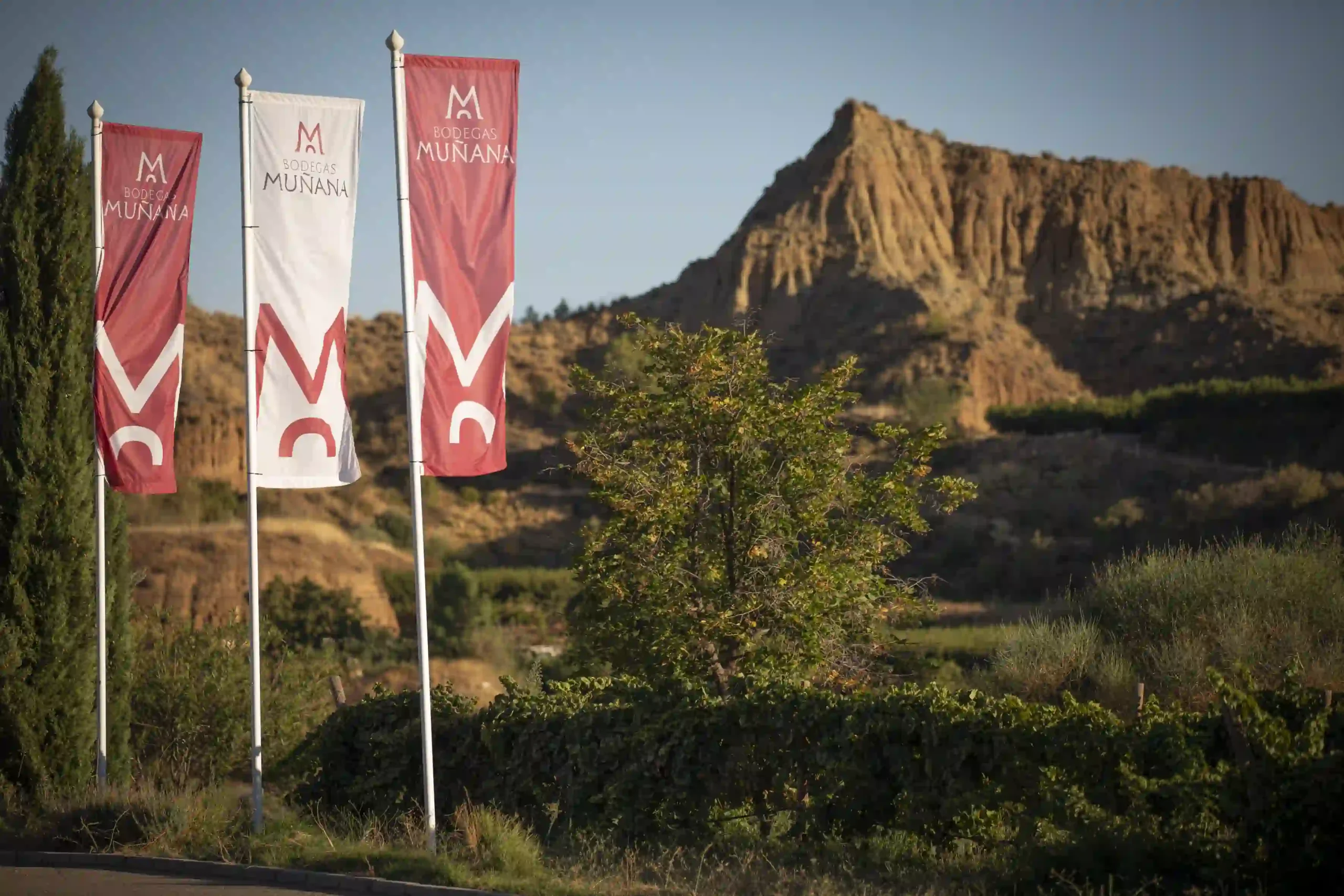
Bodegas Muñana is located in this southern area, in the municipality of MuñanaLocated at an altitude of over 1,100 meters on the slopes of the Sierra Nevada mountains, our vineyards are among the highest in the entire appellation and in all of Andalusia. This gives them the freshness, acidity, and mineral complexity that distinguish our wines from the rest of the appellation.
Profile of southern wines: Great diversity depending on altitude and exposure. At higher altitudes: fresh, acidic, and mineral wines with a highly precise aromatic expression. At lower altitudes and with a greater Mediterranean influence: warmer and more full-bodied wines.
The Contraviesa-Alpujarra region is perhaps the most unique of the three and boasts the longest uninterrupted winemaking tradition. It encompasses the southern slopes of the Sierra Nevada and the Sierra de la Contraviesa, with vineyards facing the Mediterranean and North Africa.
It is an area of viticultura heroicaVineyards on slopes with slate and schist soils, at altitudes between 600 and 1,400 meters, with a microclimate that combines the influence of the Mediterranean with the continental influence of the mountains. Rainfall is scarce and sunshine very high, but the altitude and the constant Mediterranean wind moderate temperatures and preserve the acidity of the grapes.
The Contraviesa region has its own native variety, the VijiriegaA white grape variety that is practically exclusive to this area and produces wines of great aromatic singularity and vibrant acidity. Alongside it, Tempranillo, Pedro Ximénez (in its dry version, very different from that of Montilla), Garnacha, and Moscatel form the varietal landscape of this unique region.
Profile of the wines of the Contraviesa region: White wines with great personality and lively acidity with aromas of Mediterranean herbs; red wines with intense color, ripe tannins and mineral notes of slate; high-quality natural sweet Muscat wines.
The DO Vinos de Granada includes a wide range of authorized varieties, both native and foreign, that reflect the history and diversity of Granada's viticulture.
Main varieties:
Tempranillo: The most widely planted variety in Spain is also very present in Granada, where the altitude gives it a freshness and acidity that it does not have in the warmer areas of the plateau.
Garnacha Tinta: A variety highly adapted to warm, dry climates; in Granada it produces wines with intense color and generous fruit.
Syrah: One of the varieties that has best adapted to the Granada Wine DO, especially at higher altitudes, where its aromatic potential (violet, pepper, dark fruit) is expressed with extraordinary elegance
Cabernet Sauvignon: The most represented international variety; in Sierra Nevada it loses the green and herbaceous profile it may have in cooler climates and gains in roundness and fruity complexity.
Merlot: Early maturing variety that adapts well to the conditions of the DO
Complementary and native varieties:
Romé: Native variety of the province with a long history in the Contraviesa; a rich, hardy, and colorful ink.
Petit Verdot: As we documented in our article on the characteristics of the Petit Verdot grapeThis late-ripening Bordeaux variety finds the ideal conditions in the high altitude of Granada to fully ripen without losing its intense and aromatic character.
Garnacha Tintorera: Also present in some plots in the northern area
Main varieties:
Chardonnay: The most internationally renowned white grape variety finds in Sierra Nevada the freshness that great Chardonnays need. In our article about the characteristics of the Chardonnay grape We explain why altitude is the decisive factor for this variety
Sauvignon Blanc: Its herbaceous and citrus aromas are expressed with great precision at the higher elevations of the DO
Pedro Ximénez: In the Granada Wines DO, it is also produced in a dry version, very different from the sweet PX of Montilla; it produces whites with great body and aromatic complexity.
Muscat of Alexandria and Muscat Blanc à Petits Grains: Base of the natural sweet wines of the DO, especially in the Contraviesa-Alpujarra
Notable native varieties:
Vijiriega: The great white native jewel of the DO, practically exclusive to the Contraviesa region. Loose-cluster grapes, high acidity, and distinctive aromas reminiscent of Reineta apples, white flowers, and aromatic mountain herbs. More information in our article about the native grapes of Granada
Perruno: Native white variety of minority presence but of great oenological interest
The geology of the province of Granada is as diverse as its topography, and that diversity is directly reflected in the profile of its wines.
The high mountain vineyards of Sierra Nevada, such as those of Bodegas Muñana, are located on soils of metamorphic rocks —mica schists, gneisses, slates— which are the dominant geological substrate of the high areas of the mountain range.
These soils have very particular characteristics:
Low fertility and high stoniness: They force the vine to deepen its roots in search of water and nutrients, developing extensive root systems that access deep mineral layers.
Good drainage: The schist and slate structure promotes rainwater drainage, preventing waterlogging and stress from excess moisture.
High heat retention capacity: The dark rocks accumulate solar heat during the day and release it at night, moderating nighttime temperatures and aiding the ripening of grapes in a high-altitude environment.
Specific mineral content: Silicon, mica, feldspar and other minerals from metamorphic rocks are expressed in the characteristic minerality of Sierra Nevada wines: that note of damp stone, graphite or mountain earth that distinguishes these wines from any other Andalusian wine
Como explicamos en nuestro artículo sobre What is wine terroir?The soil does not literally contribute its minerals to the wine through the plant—that mechanism is more complex than popular myth suggests—but it does have a decisive influence on the water and nutritional behavior of the vine, and through it on the wine's profile.
In the more continental areas of northern Granada, the soils are primarily composed of clay with limestoneSedimentary materials deposited by ancient lake and river basins. These soils, more fertile than the metamorphic soils of the mountains, produce wines with greater volume and tannic structure.
In the Contraviesa region, the soils of slate and schist The dark-hued trees are the defining feature of the landscape. Their ability to reflect light and accumulate heat, combined with the altitude and the Mediterranean wind, creates unique conditions for the native white wines and the naturally sweet Muscat wines.
Despite the diversity of zones, soils, and microclimates, the Granada Wine DO has a unifying climatic factor that distinguishes it from all other Andalusian designations: the altitude.
Virtually all the vineyards in the DO are located above 700 meters, and a significant portion exceed 1,000 meters. This average altitude is the highest in Andalusia and one of the highest in Spain, comparable to the vineyards of the DO Ribera del Duero (700-900 m) and even some vineyards of the DO Bierzo and the DO Ribeira Sacra.
The climatic consequences of this altitude are direct and measurable:
Lower temperatures: Especially in summer. While the Mediterranean coast of Granada reaches highs of 38-40°C, the vineyards of Sierra Nevada rarely exceed 30°C on the hottest summer days.
Cool nights: The temperature range (difference between maximum daytime and minimum nighttime temperatures) can reach 20-25°C in high-altitude vineyards. This range is the most critical factor for preserving the acidity and primary aromas of the grapes.
Slower and more prolonged maturation: The combination of warm days and cool nights slows down the ripening of the grapes, allowing them to accumulate aromatic complexity and sugars more gradually without sacrificing acidity.
Increased sun exposure: The lower cloud cover and greater proximity to the sun in high mountain areas intensify photosynthesis and the synthesis of anthocyanins (pigments) and polyphenols in grapes.
These conditions produce wines with a profile that is virtually impossible to replicate in low-altitude areas: fresh, acidic, aromatic and mineral, with a tension in the mouth that radically differentiates them from the rest of the Andalusian wines.
The Granada Wine DO breaks with almost all the clichés of Andalusian wine, and that break is precisely its greatest asset:
This radical differentiation is the reason why the wines of the DO Vinos de Granada do not compete with Jerez or Montilla: they are different products for different moments and different consumers, which share their Andalusian origin but belong to different oenological worlds.
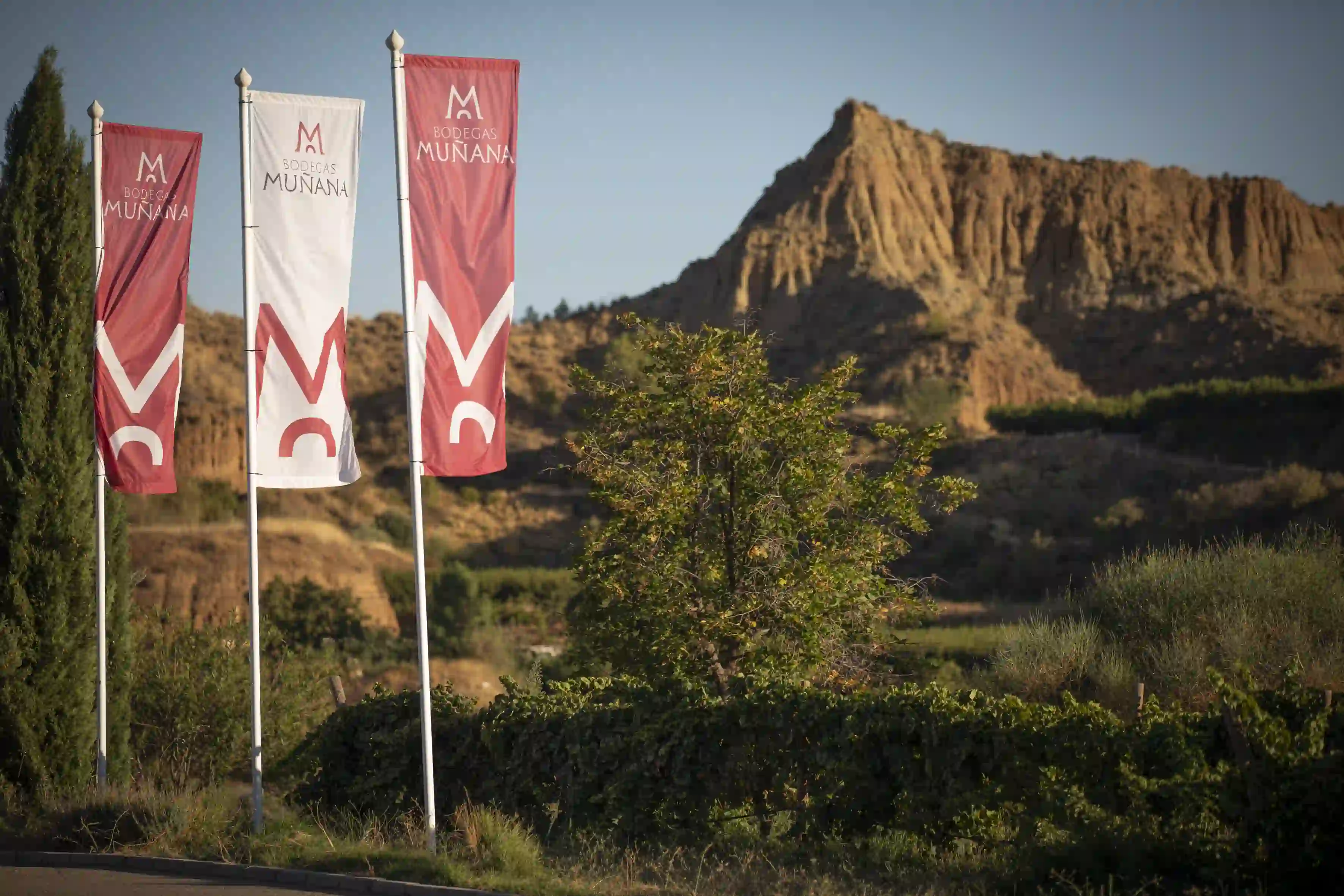
The Granada Wines Designation of Origin is not only a quality designation: it is also a territory of extraordinary tourist and landscape richness that is beginning to capitalize on its wine tourism potential.
A tour of the Granada Wine DO can combine the following in just a few days:
The high mountain vineyards of Sierra Nevada with the highest peaks of the Peninsula as a backdrop
The Alhambra in Granada, a World Heritage Site, and the city of Granada with its Nasrid legacy
The white villages of the Alpujarra, one of the most photogenic rural landscapes in Spain
The tropical beaches of the Costa Tropical, just an hour from the high-altitude vineyards
Granada's gastronomy: the phenomenon of free tapas with every drink, the tradition of mountain dishes, and the Arab influence on local cuisine
Bodegas Muñana offers wine tourism tours that combine a walk through the Sierra Nevada vineyards, a visit to the winery, and a guided tasting of our full range. It's an experience designed to help you understand firsthand why altitude matters, why Sierra Nevada is a unique vineyard, and why Granada wines are unlike anything southern Spain has produced before. Book your visit on our website. Wine tourism in Granada.
The Granada Wines DO is still young in its official recognition, but its foundations are extraordinary and its trajectory clearly points upwards.
Several factors point to a bright future for this denomination:
Climate change as a relative opportunity: While global warming is negatively impacting many lowland wine regions—reducing acidity, increasing alcohol levels, and bringing forward the harvest in problematic ways—the high-altitude vineyards of the Granada Wines DO are responding more resiliently. The altitude acts as a “climate buffer,” moderating the impact of warming, and in some cases, it is even allowing varieties that previously struggled to reach optimal ripeness to mature.
The growing interest in mountain wines: The most discerning international consumer is increasingly interested in high-altitude wines from around the world—Argentina, Chile, Spain, Italy, Greece—as an alternative to overripe, high-alcohol wines from lower-lying areas. The Granada Wines DO is ideally positioned to capitalize on this trend.
Uniqueness as a differentiating asset: In a global wine market with thousands of designations of origin, uniqueness is a rare and valuable asset. The Granada Wines DO possesses authentic uniqueness: the highest in Andalusia, with unique metamorphic soils, its own native grape varieties, and a wine profile radically different from the rest of Andalusian wines.
The Granada Wine DO is not a designation that fits the mold of traditional Andalusian wine. It is a designation that expands, enriches, and challenges it with fresh, acidic, mineral, and complex wines that could be mistaken in a blind tasting for wines from Ribera del Duero, Burgundy, or the Italian Alps.
That ability to surprise is its greatest strength. In a world where more and more consumers are looking for wines that tell a new story, that express a different place, and that break with tradition, the Granada Wines DO has a lot to offer.
At Bodegas Muñana, we've been saying it for decades from our vineyards in Sierra Nevada. If you haven't yet discovered our wines, we invite you to come and see them at the online store or, even better, in person with a visit to the winerySome wines must be drunk in the place where they are born to be fully understood.
 Spanish Spanish
 English
 Chinese
Puedes realizar tus pedidos con normalidad hasta el 31 de julio.
Durante estas fechas no será posible tramitar pedidos. Volveremos a estar operativos el 16 de agosto.