


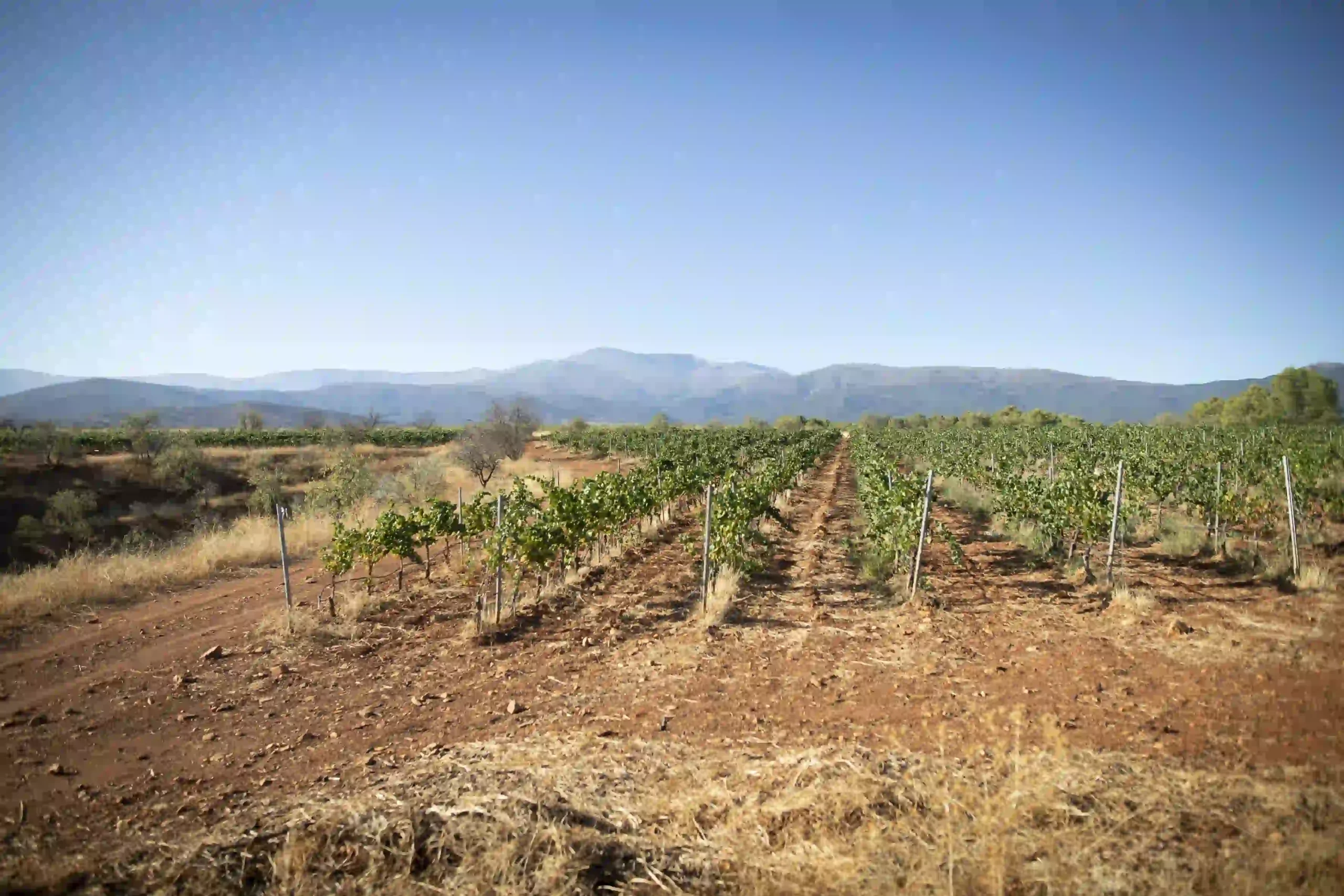
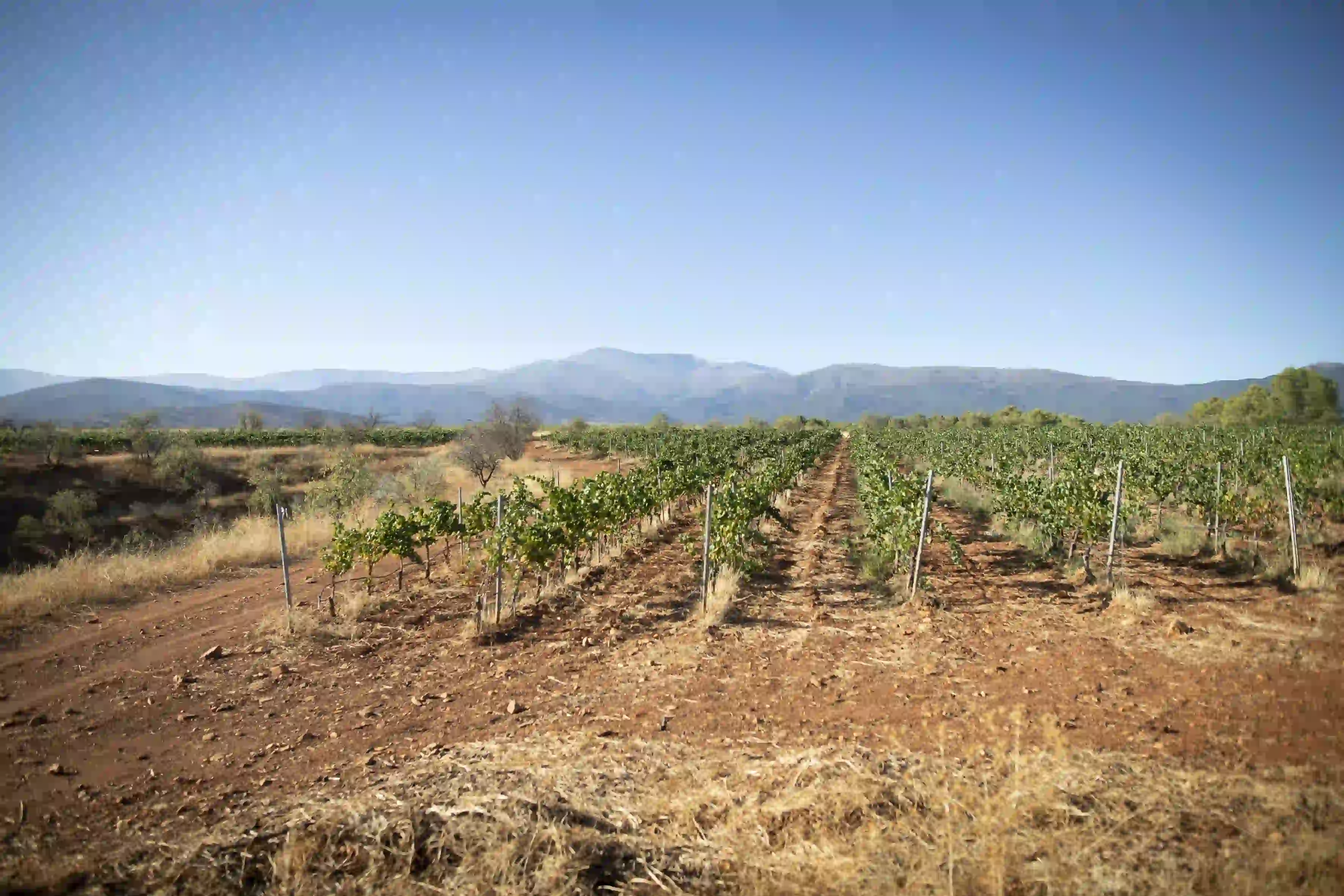
If there is one white grape that defines the image of wine worldwide, it is the ChardonnayThe most widely planted and renowned white grape variety on the planet, capable of producing everything from the most refined Champagne to the great white wines of Burgundy, as well as fresh, mineral wines from high mountain vineyards like those we make at Bodegas Muñana. A grape that, paradoxically, is so versatile that it's sometimes difficult to distinguish: the Chardonnay from Chablis is not like that from Napa Valley, and neither resembles the one grown in the vineyards of the Sierra Nevada mountains at an altitude of over 1,100 meters.
This ability to transform itself according to where it grows and the decisions of the winemaker is both its greatest virtue and its greatest mystery. Understanding Chardonnay means understanding how terroir and the winemaker's hand can turn the same grape into radically different wines.
Chardonnay originated in the region of BurgundyIn northeastern France, where it has a documented presence since the Middle Ages. Its name comes from a small village in the Mâconnais region called Chardonnay, although for centuries it was cultivated under multiple local names that made its unified identification difficult.
Modern genetic analysis has determined that Chardonnay is the result of an ancient natural cross between two Burgundy varieties: Pinot Noir (red wine) and the Gouais Blanc (white, practically extinct today). This origin explains its close relationship with Pinot Noir in the great terroirs of Burgundy, where they coexist and complement each other in the most legendary wines in the world.
Its global expansion was meteoric during the 20th century. Today it is the most planted white variety in the worldWith a dominant presence in France, Australia, California, Chile, Argentina, New Zealand, Italy, Spain, and virtually every significant wine-producing region, it arrived in Spain in the 1980s and 90s, initially in Catalonia and Navarre, and has since conquered designations of origin throughout the country, including the high-altitude areas of Granada.
The most critical agronomic characteristic of Chardonnay is its very early budding, one of the earliest-ripening of the important wine grape varieties. This early budding frequently exposes it to the late spring frostswhich can destroy newly sprouted shoots and decimate an entire year's harvest.
This risk is one of the reasons why Chardonnay performs particularly well in areas where spring frosts are infrequent or mild. In the high-altitude vineyards of Bodegas Muñana, the exposure and microclimate of the Sierra Nevada mountains mitigate this risk, but monitoring budbreak in spring is always one of the most critical moments of the winemaking year.
Chardonnay is a variety of Medium vigor and early to medium maturationThis allows it to reach optimal ripeness even in cooler areas where other white varieties would struggle. This flexibility in ripening is another key to its global adaptability.
Its productivity is abundant if left unchecked, leading quality producers to employ short pruning and limit yields to concentrate quality in fewer bunches. The world's great Chardonnays—such as the Meursault and Puligny-Montrachet from Burgundy—come from vineyards with very low yields, where each vine produces only a few kilograms of grapes of maximum concentration.
The Chardonnay grape cluster is small to medium sizeIt is compact, with small, thin-skinned berries that turn yellow-green in color, becoming golden when fully ripe. This thin skin is a key characteristic: Chardonnay accumulates fewer compounds in the skin than thick-skinned varieties, which explains why its wines have less tannic structure—virtually none in the whites—but a greater sensitivity to the aromatic expression of the terroir.
Chardonnay is relatively susceptible to powdery mildew and botrytisThis is especially true in their compact clusters where moisture can accumulate between the berries. Therefore, the choice of rootstock, planting density, and canopy management are critical decisions in their cultivation. In low-humidity areas like the mountain vineyards of Granada, this risk is considerably reduced.
Young, unoaked Chardonnay presents a color pale yellow with greenish reflectionsBright and highly transparent. With barrel aging, the color evolves towards golden yellow, and in older wines it can reach amber tones. Color is always a primary indicator of style: greener = fresher and unoaked; more golden = aged or from a warm climate.
The aromatic profile of Chardonnay is the most variable of all the major wine varieties, making it the most difficult to describe universally. Its aromas depend on three simultaneous factors: terroir, climate, and winemaking.
Chardonnay from cool climates or high altitudes (no oak):
Green apple, pear, lemon, grapefruit, white flowers
Mineral notes: flint, chalk, iodine
High acidity and tension in the mouth
Temperate climate Chardonnay aged in oak barrels:
Ripe apple, peach, apricot, pineapple
Vanilla, butter, toasted, hazelnut
A richer, more voluminous texture
Warm climate Chardonnay (unoaked):
Tropical fruit: mango, papaya, ripe pineapple
Lower acidity, more volume, less tension
Aged Chardonnay (Reference Burgundy):
Hazelnut butter, roasted nuts, honey, white truffle
Deep minerality, long persistence on the palate
This variability makes Chardonnay, for many enthusiasts, the most interesting variety to explore horizontally (same wine, different regions) and vertically (same wine, different vintages).
Acidity is the factor that varies most in Chardonnay depending on the climate and altitude:
In warm climates Without elevation: Low acidity, voluminous wines but with little tension and short life
In cool or high-altitude climatesMedium-high acidity, wines with tension, elegance and greater aging potential
In Chablis (Northern Burgundy, very cool climate): Very high acidity, extreme minerality, citrus and flint notes
In the vineyards of Bodegas Muñana, the altitude of Sierra Nevada solves this dilemma naturally: although the climate of Granada is Mediterranean and warm in summer, the more than 1,100 meters of altitude guarantee cool nights that preserve the natural acidity of the Chardonnay, producing a wine with the freshness and tension of a cool area and the aromatic character of a Mediterranean area.
Chardonnay has a unique ability to develop oily and voluminous textures With barrel aging and contact with the lees. Malolactic fermentation—which transforms malic acid (more aggressive) into lactic acid (milder)—can add creaminess and roundness to the wine. batoning (periodic removal of the lees in the barrel) further amplifies this texture.
The result of this process is that "liquid butter" sensation that characterizes great aged Chardonnays, and that radically differentiates them from fine, taut white wines without oak aging.
No other white grape variety produces such radically different styles as Chardonnay. The main global styles:
He Muñana 1188 Chardonnay It embodies the style we are most passionate about: high-altitude Chardonnay, carefully aged in oak barrels to add complexity and texture without the wood masking the freshness and minerality that only vineyards at over 1,100 meters can provide. Closer to Burgundy than California, with the unique character of Sierra Nevada.
The world of Chardonnay is divided between two winemaking philosophies that produce wines that are almost unrecognizable from each other:
Fermented and aged in stainless steel or cement tanks, without contact with oak. It preserves all the aromatic freshness of the grape: apple, pear, citrus, and flowers. It has a higher perceived acidity and less complexity, but offers maximum expression of the terroir. This is the style of Chablis and many Chardonnays from cool climates.
Fermented and/or aged in oak barrels. The wood imparts vanilla, toast, butter, and hazelnut notes. The ellagic tannins from the oak add texture. batoning Aged on the lees, it adds creaminess. This increases complexity but reduces the expression of the fruit and terroir if overdone. It's the classic style of the Côte de Beaune and of great Chardonnays from around the world.
The key is balance: too much oak masks the Chardonnay; too little can leave it flat if the grape lacks sufficient inherent complexity. The winemaker's art lies in finding the precise point where the oak enhances without detracting.
To better understand how the barrel transforms the wine, we recommend our article on What is the oak barrel in wine?, where we explain this process in detail.
Chardonnay is one of the most versatile white wines on the table, with an ability to adapt to food pairings that few white wines can match:
Seafood and mollusks: Fresh and mineral Chardonnay (Chablis style) is the classic pairing for oysters and shellfish. Its minerality and acidity enhance the briny flavor.
Baked or grilled fish: A gently aged Chardonnay pairs elegantly with turbot, sea bass, or monkfish. The wine's texture complements the texture of the fish.
Mushroom risotto with truffle: As we mentioned in our guide wine and vegetarian food pairingA full-bodied Chardonnay is the best companion for mushroom risottos.
Foie gras and pâtés: Barrel-aged Chardonnay, especially with notes of butter and hazelnut, has a natural affinity with the rich fat of foie gras.
Roast chicken and poultry: The most classic and accurate pairing for aged Chardonnay; the richness of the roast chicken and the aromas of oak complement each other perfectly.
Soft and creamy cheeses: Brie, Camembert, washed-rind cheeses; the creaminess of the aged Chardonnay and that of these cheeses create a harmony of textures
Chardonnay is our only main white variety, and in the vineyards of Sierra Nevada it finds a unique expression that sets it apart from all other benchmark Spanish Chardonnays:
You can learn about the characteristics of each red variety in our articles about the Syrah grape, the Tempranillo grape, the uva Cabernet Sauvignon and the uva Petit Verdot.
Chardonnay is one of the varieties where altitude has the most dramatic and positive impact on the final wine profile. In low-altitude areas with warm climates, Chardonnay tends to:
Lose acidity rapidly during maturation, producing flat and short-lived wines.
Grow tropical fruit at the expense of freshness and minerality
Need more intervention Technological interventions in the winery (acidity correction, chaptalization) to compensate for imbalances
In the vineyards of Sierra Nevada, at over 1,100 meters, the opposite is true:
The acidity is preserved thanks to the cool nights that slow down the degradation of malic acid
Maturation is slower and progressive, accumulating aromatic complexity without sacrificing freshness
Soil minerality This is more clearly imprinted on the wine because the moderate water stress of the mountains deepens the roots, allowing them access to more complex mineral layers.
The temperature range (The large difference between daytime and nighttime temperatures) is the signature of high-altitude character in Chardonnay: more precise aromas, livelier acidity, a longer and more complex finish
As we explained in detail in our article on What is wine terroir?Altitude is not a number: it is a set of conditions that are imprinted on the grape and, through it, on each glass.
The Chardonnay from Sierra Nevada is perhaps the most surprising expression of this variety in Spain. Not because it tries to imitate Burgundy, but because it expresses something unique and inimitable: the freshness of the mountains, the minerality of the Granada soil, the precise fruit of a Mediterranean climate tempered by the altitude. A Chardonnay unlike any other Spanish Chardonnay, and one that has more to say in the glass than anyone would expect from an Andalusian vineyard.
At Bodegas Muñana, we craft it with the same philosophy that guides all our wines: that the wine expresses the terroir, that the winery doesn't mask what nature has created. And that when you open a bottle of Muñana 1188 Chardonnay, you feel with the first sip that you are drinking Sierra Nevada.
Discover it in our online wine shop Or come and visit the vineyard in person with a wine tourism visit in Granada.
 Spanish Spanish
 English
 Chinese
Puedes realizar tus pedidos con normalidad hasta el 31 de julio.
Durante estas fechas no será posible tramitar pedidos. Volveremos a estar operativos el 16 de agosto.