



Rosé wine is perhaps the most misunderstood wine in the world. For decades it was relegated to a secondary role—the wine of summer, the unpretentious wine, the one drunk by those who couldn't decide between red and white—while reds and whites garnered the prestige and attention of critics and enthusiasts. Today that image has changed radically: the best rosés in the world are highly expressive wines, with their own personality and a complexity that rivals many benchmark whites and reds.
But how exactly is rosé wine made? Where does that color come from, which can range from almost transparent pale pink to deep salmon or vibrant raspberry? Is it simply a blend of red and white wine? The answer is more interesting than it seems.
Let's start by debunking the most widespread misconception. In the vast majority of cases, Rosé wine is not made by mixing red wine with white wine.It's an intuitive but incorrect idea that greatly underestimates the complexity of the process.
There is an exception to this rule: in the production of some rosé champagnes In high-end wines (and in very few still wines), blending separately fermented red and white wines is a legitimate and recognized technique. But it's the exception, not the rule.
Genuine rosé is born from red grapes processed in a specific way It only extracts a portion of the color from the skins, without achieving the full extraction of red wines. The color, aromas, and structure of rosé depend on how long and under what conditions the must has been in contact with the skins of the red grapes. And that's where all the magic and technique lie.
It is the most widespread method for making quality rosé wines worldwide, and the one that produces the rosé wines with the greatest aromatic expression and personality.
The step-by-step process:
Red grape harvest — generally harvested slightly earlier than for red wines, when the grapes have more acidity and less sugar, to preserve the characteristic freshness of rosé wines
Gently squeezed — the grape skin is gently broken to release the must without over-extracting the tannins
Cold skin maceration — the must remains in contact with the skins for a controlled time, generally between 2 and 24 hours, at low temperature (8-12 °C) to slow down the extraction and control the color and aromas
Bleeding or mud removal — the must is separated from the skins when it has reached the desired color and aromatic profile
Fermentación alcohólica — the must, now without skins, ferments like a white wine, at a controlled low temperature (14-18 °C) to preserve the fruity and floral aromas
Stabilization and bottling — generally without oak aging or prolonged maturation, to preserve freshness
What determines the final color:
The grape variety (more pigmented grapes like Syrah or Cabernet give more intense colors)
The maceration temperature (colder = slower and more controlled extraction)
Maceration time (more time = more color and intensity)
The degree of crushing (gentler = less pigment extraction)
This method is a byproduct of making highly concentrated red wines. When a very concentrated red wine is desired, a portion of the must is "bleeded"—extracted—at the beginning of maceration, before it has acquired much color. This drawn-off must is then fermented separately as a rosé.
Characteristics of bleeding pink:
More intense color than those made by short maceration, generally salmon or dark pink
Greater body and structure, with more extract and complexity
A more vinous and less floral profile than short maceration rosés
It is the method used by many rosé wines from Provence and some high-end Spanish wines.
The paradox of the saignée method is that the primary goal is not to make the best possible rosé, but the best red wine: rosé is almost a byproduct of that process. However, in expert hands, it can produce rosés of remarkable character.
In this method, the red grapes go directly to the press without prior maceration. The must that comes out of the pressing has a very pale color—almost like white wine—because the contact with the skins has been minimal and very brief.
Characteristics of direct-pressed rosé:
Very pale color: onion skin pink, peach, almost transparent
Very fine and delicate aromas: white flowers, stone fruit, citrus
Light body, high acidity, very refreshing
It is the method of the famous pale rosés of Provence (southern France), which have made the "almost white" rosé fashionable.
The color of rosé wine is not a mere aesthetic detail: it is a direct result of the production method and communicates real information about the style of the wine even before tasting it.
One of the best-kept secrets of making quality rosé wines is the temperature control at every stage of the process. Unlike red wines, where high temperatures help to extract color and structure, in rosés, cold is the great ally:
Cold maceration (8-12 °C): Slows down the extraction of color and tannins but favors the extraction of delicate fruity and floral aromas. The result is a more aromatic and elegant rosé.
Cold fermentation (14-16 °C): Preserves the most volatile aromatic compounds that would evaporate with heat. The world's best rosés ferment at very low temperatures for long periods, sacrificing speed for aromatic finesse.
Night or early morning harvestAs we explained in our article about night harvestHarvesting the grapes in the cool of the early morning is especially critical for rosé wines, whose identity depends on primary aromas that are very sensitive to heat.
Not all red grapes produce equally interesting rosés. The best varieties for rosé share certain characteristics: high natural acidity, expressive varietal aromas, and moderate tannins that don't impart astringency even with short maceration.
Varieties with great aptitude for rosé:
Garnacha: The queen of Spanish rosé, especially in Navarra and Campo de Borja. It produces raspberry-colored rosés with notes of red fruit and an irresistible freshness.
Syrah: Its notes of violet, dark fruit, and the freshness it imparts in high-altitude vineyards make it ideal for rosés with character and complexity. It is the base variety for Bodegas Muñana's rosé.
Tempranillo: It produces pale cherry-colored rosés with notes of strawberry and raspberry. Very common in Rioja.
Cabernet Sauvignon: It produces intensely colored rosés, with notes of currant and a more structured profile.
Pinot Noir: The variety used in rosé Champagne and some of the world's finest rosés. It produces pale colors and aromas of great finesse.
Rosé is perhaps the type of wine where vineyard altitude has the most immediate and visible impact on the final result. The reason is simple: Rosé relies almost exclusively on its primary aromas —those that come directly from the grape— and those aromas are the most delicate and the most sensitive to temperature.
In low-altitude vineyards with intense heat, the finest aromas of the grapes degrade before harvest and during the winemaking process. The result is flat rosé wines with little aromatic expression, which compensate for their lack of finesse with color and body.
In the vineyards of Bodegas Muñana, at more than 1,100 meters in Sierra Nevada, the opposite occurs:
The cool nights preserve the aromas of the grapes until the very last moment before the harvest.
The temperature range (large difference between day and night temperatures) favors the accumulation of aromatic compounds in the skin
The natural acidity is preserved, giving the rosé that tension and liveliness that make it longer and more interesting on the palate.
The intense solar radiation of the mountains favors the synthesis of anthocyanins (pigments) and aromas in the skin, without excessive heat degrading them.
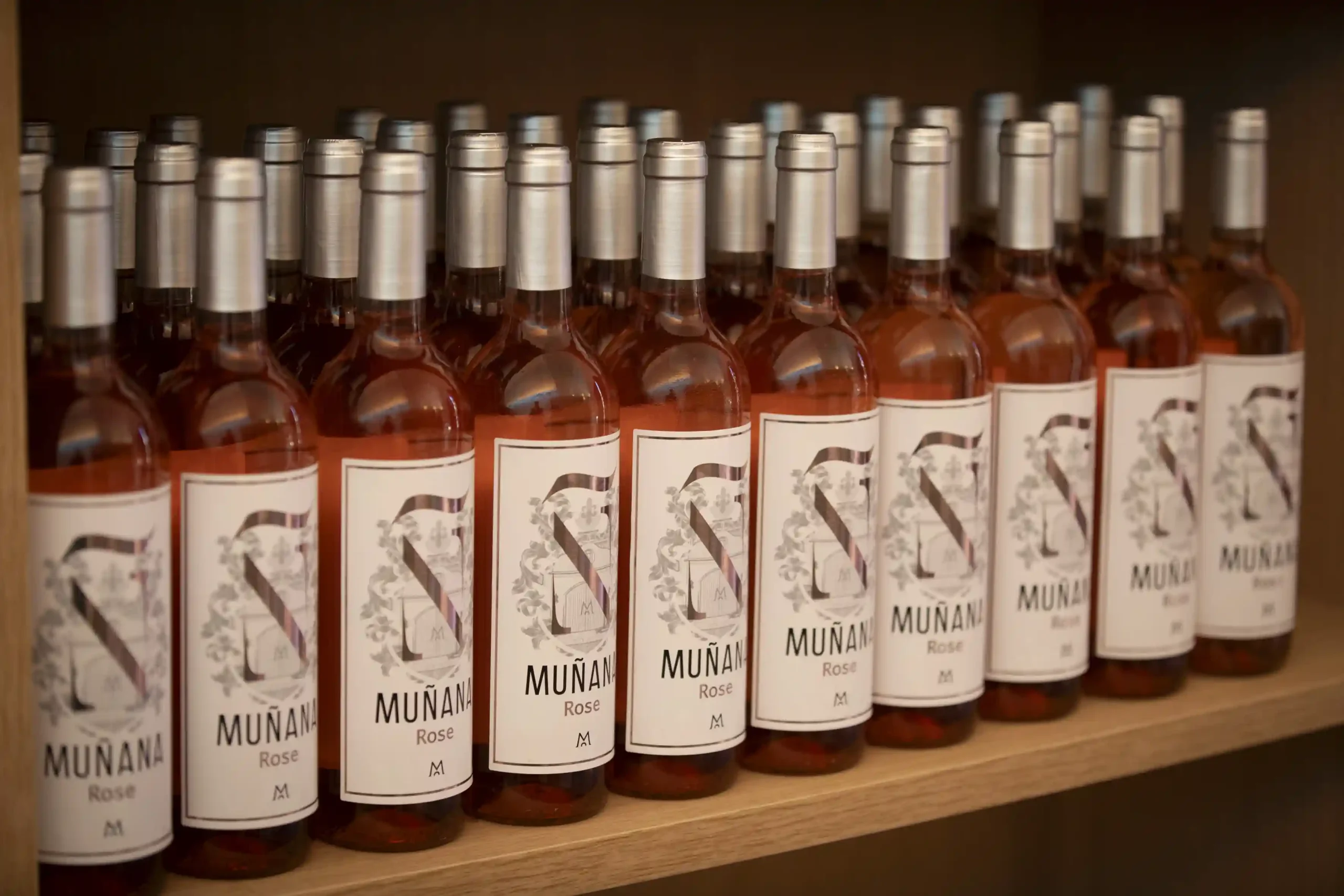
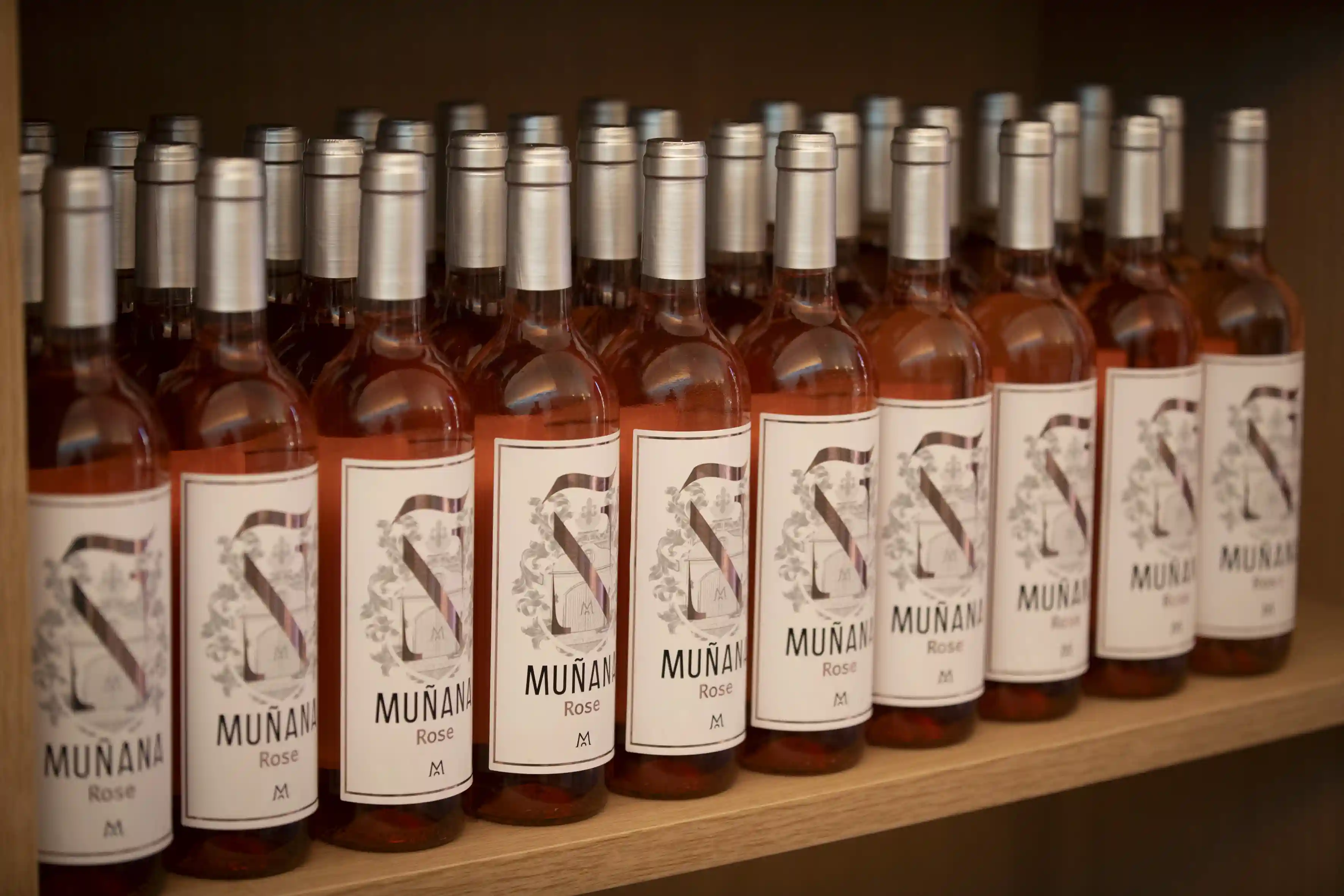
The result is the Muñana Rosé: a rosé made primarily with high mountain Syrah grapes, with that vibrant raspberry color, those aromas of fresh red fruit and flowers that are the signature of the Sierra Nevada vineyards, and that lively acidity that makes it one of the freshest and most expressive rosés in Andalusia.
The vast majority of rosé wines are made for young and fresh consumption, without oak aging. Its greatest virtue —aromatic freshness— is also its greatest weakness over time: unoaked rosés generally do not improve with age but rather lose their vibrancy.
However, there is an emerging category of aged rosés which is redefining the boundaries of the type. Wineries in Provence, Navarra and other cutting-edge regions are producing rosés aged in oak barrels —generally old and large-format barrels to avoid excessive wood influence— that produce wines with more texture, more complexity and greater aging potential.
To understand how barrel aging transforms any wine, we recommend our guide on the Differences between crianza, reserva and gran reserva.
Rosé is a wine that depends heavily on the serving temperatureServed too hot, it loses all its charm: the floral and fruity aromas evaporate, the acidity flattens, and what remains is a bland wine. Served at the right temperature, it's a revelation.
Ideal temperature: 8-10 °C, clearly cooler than a young red wine and similar to a summer white wine
Recommended cup: A white or rosé glass (medium-sized tulip-shaped) that concentrates the fresh aromas and preserves the temperature. More information in our guide. types of wine glass
Optimal time to consume: Young rosé wines are best when consumed within the year of production or in the following 12-18 months. Freshness is their greatest asset, and this quality diminishes with time.
If there's one wine designed for tapas, it's rosé. Its medium-high acidity, freshness, light body, and aromatic versatility make it the most adaptable companion for the variety of flavors offered by an afternoon of tapas. From ham to prawns, from croquettes to piquillo peppers: a quality rosé goes with almost everything.
For a complete guide on which wine to choose with each tapa, visit our article on wine and tapas pairingwhere you will find the best combinations for tapas in Granada and Spain.
Rosé wine is the result of a precise technical process, careful agronomic decisions, and a winemaking philosophy that prioritizes freshness and aromatic expressiveness above all else. It's not a second-rate wine: it's a wine with a clear and well-executed purpose.
At Bodegas Muñana, we craft our rosé with the same care and respect we dedicate to the reds in our 1188 range. Because we believe that a high-altitude rosé, made with Syrah grapes from vineyards at over 1,100 meters in the Sierra Nevada mountains, and with the early morning chill preserving every aroma, deserves pride of place at any table. Especially in summer. Especially chilled. Especially in Granada.
 Spanish Spanish
 English
 Chinese
Puedes realizar tus pedidos con normalidad hasta el 31 de julio.
Durante estas fechas no será posible tramitar pedidos. Volveremos a estar operativos el 16 de agosto.