



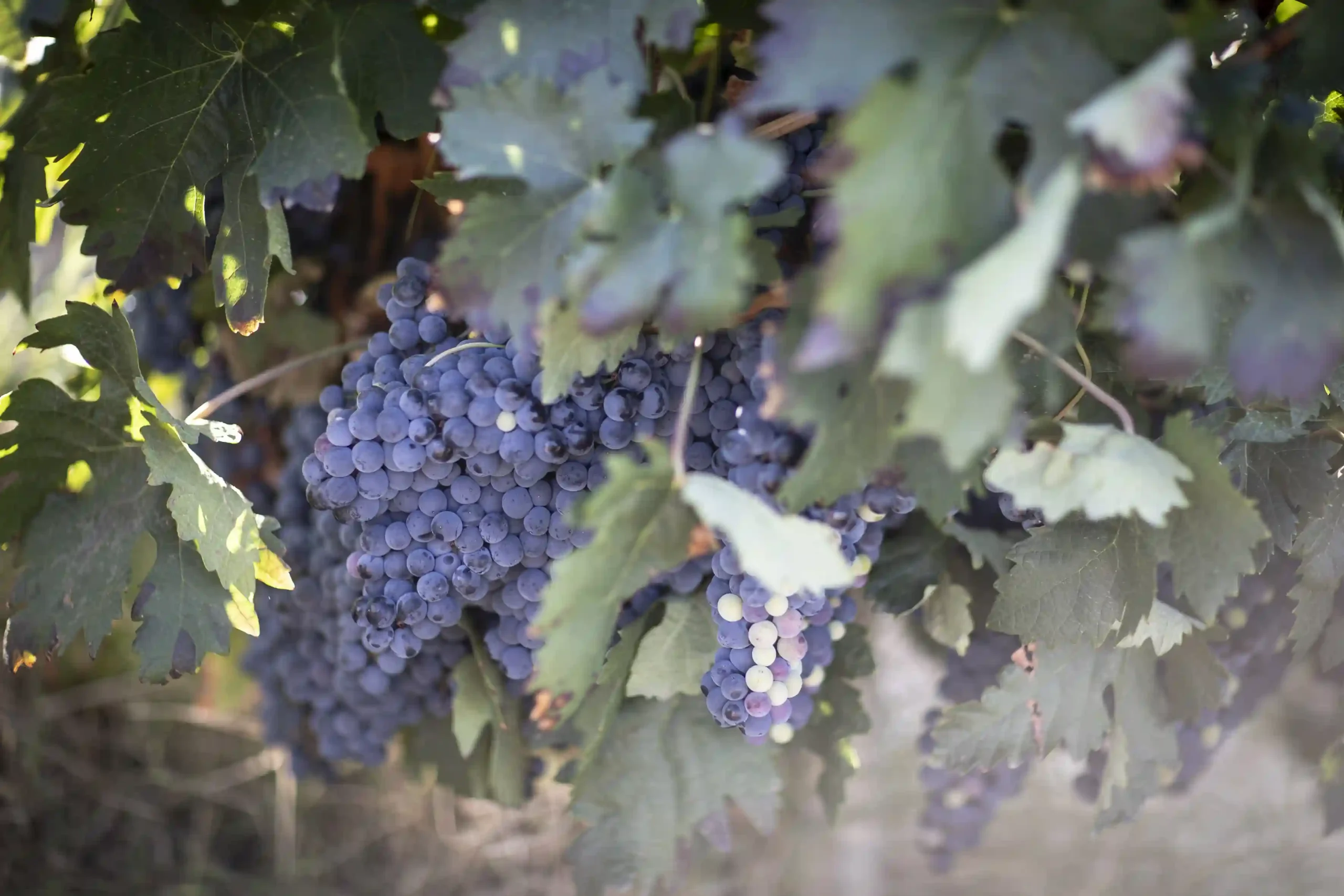
If there is one grape that defines the winemaking identity of Spain, it is the SpikeThe most widely cultivated variety in the country, the foundation of the great Riojas and Riberas del Duero, and responsible for some of the most internationally renowned Spanish wines. And yet, as with all great varieties, its character changes radically depending on where it grows: a Tempranillo from the valleys of La Rioja is not the same as one from the plateaus of Castile, or one grown at over 1,100 meters on the slopes of the Sierra Nevada.
To know Tempranillo is to know a fundamental part of Spanish wine culture, and to understand why at Bodegas Muñana we are committed to this variety in our high-altitude vineyards in Alhama de Granada.
The name says it all: Spike It comes from "early", and refers to the fact that this variety matures earlier than most other red grapes in its environment, an agronomic trait that has historically determined where and how it is cultivated.
Its origin lies in the Iberian PeninsulaTempranillo has a documented presence in the wine-growing regions of northern and central Spain dating back centuries. Modern genetic analyses have determined that Tempranillo is an ancient natural cross between two Iberian varieties: Albillo Mayor (white) and the Benedict (ink), which makes it a genuinely Spanish variety with no direct relatives outside the Peninsula.
Over the centuries it has received dozens of different names depending on the region where it is grown, which for a long time made it difficult to recognize that it was the same grape:
Spike → Rioja, Navarra
Fine Dyed the Ink of the Country → Ribera del Duero
Cencibel → La Mancha, Valdepeñas
Tempranillo → Catalonia
Aragonese the Roriz Ink → Portugal (where it is fundamental in the wines of the Douro and Port)
Bull's Ink → Toro (Zamora), although with genetic differences accumulated over centuries of isolated evolution
Today is the third most planted red grape variety in the world, second only to Cabernet Sauvignon and Merlot, with a dominant presence in Spain and a growing presence in Argentina, Portugal, Australia and the United States.
The most defining agronomic characteristic of Tempranillo is, precisely, its early ripeningWhile other varieties such as Cabernet Sauvignon or Garnacha ripen in October, Tempranillo usually completes its cycle in September, and even earlier in warm years or in southern climates.
This early maturation has important implications:
In warm climates, Tempranillo can be harvested too soonbefore the tannins and polyphenols have reached optimal maturity, producing unbalanced wines
In high-altitude areas or cooler climates, slower ripening compensates for this tendency, allowing the grape to achieve a much more harmonious balance between sugars, acidity, and phenolic maturity.
At Bodegas Muñana, the altitude of our vineyards in Sierra Nevada naturally delays the ripening of the Tempranillo grape, allowing us to work with a more balanced and complex grape than would be obtained in lower areas with the same summer heat.
Tempranillo is a variety of medium-high vigor and a tendency to produce generous yields if not properly controlled. As with Syrah, the best Tempranillo wines come from vineyards with high planting densities, short pruning, and low yields that concentrate quality in a few bunches per vine.
Old Tempranillo vineyards—30, 40 or more years old—produce especially concentrated and interesting grapes, because the mature plant has developed deep roots that access layers of soil inaccessible to young plants, extracting minerals and water in a more efficient and complex way.
The Tempranillo bunch is from medium to large sizewith medium-sized berries with medium-thick skin and a deep black-red color. Its skin, less thick than that of Cabernet Sauvignon or Petit Verdot, produces wines with fewer tannins but a softer and more velvety texture.
Tempranillo is relatively sensitive to prolonged drought and excessive heat, which can cause premature exhaustion of the plant and a loss of acidity in the grapes. That's why, paradoxically, the best expressions of Tempranillo don't always come from the warmest areas of Spain, but from those with greater temperature variations and a certain nighttime coolness: the high plateaus of Castile, the slopes of the Ebro in Rioja Alavesa, and, precisely, the mountain vineyards of Granada.
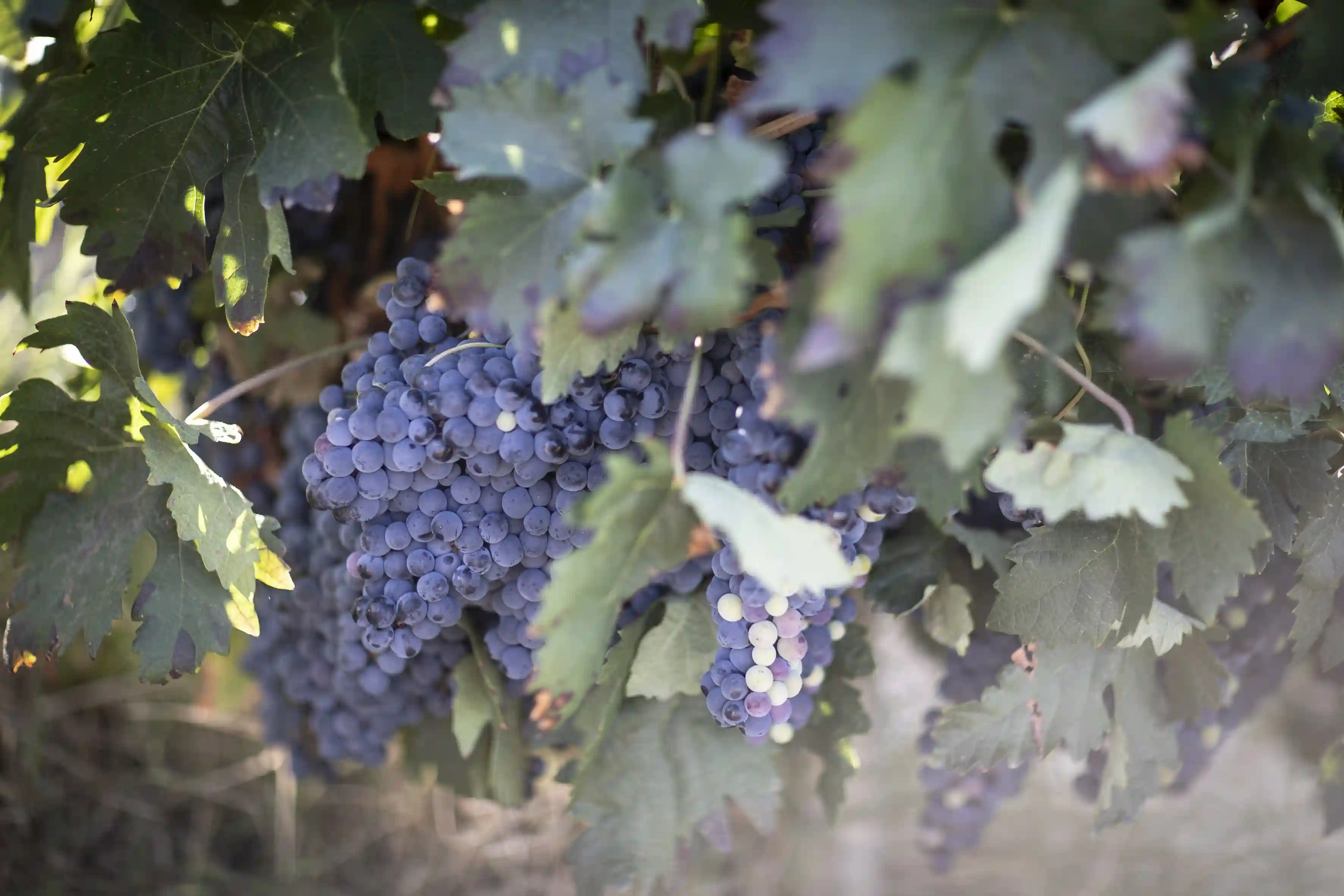
Tempranillo produces wines of intense ruby red colorBright when young, it evolves towards garnet tones with brick-red highlights as it ages. Its color intensity is notable but somewhat less than that of Cabernet Sauvignon or Petit Verdot, which is also reflected in a slightly lighter tannic structure.
The aromatic profile of Tempranillo is one of the most balanced and accessible in the world of wine, which partly explains its enormous popularity:
Primary aromas (from the grape):
Red and black fruit: Cherry, raspberry, plum, blackberry
Floral: Violet, rose, hibiscus
Fresh herbs and spices: Thyme, rosemary, licorice, some red pepper
Secondary aromas (from fermentation):
Ripe fruit, red fruit jam, plum compote
Tertiary aromas (from aging):
Vanilla and coconut (from American oak, so characteristic of classic Riojas)
Cedar and tobacco (from the French oak)
Fine leather, damp earth, truffle, dark chocolate in the grand reserves
The combination of fresh red fruit, floral notes and warm spices is the signature of young Tempranillo; with aging, that fruit evolves towards more complex and earthy notes without ever losing its warmth and accessibility.
Here is one of the most critical points of Tempranillo: its natural acidity is medium-lowespecially in warm climates. This tendency to lose acidity in the heat can produce wines that, while flavorful, are flat and short-lived. This is one of the reasons why great Tempranillo Reserva and Gran Reserva wines historically came from cooler areas (Rioja Alta, Ribera del Duero at high altitudes).
In the high-altitude vineyards of Bodegas Muñana, the altitude solves this problem naturally: the cool nights of the Sierra Nevada slow the degradation of malic acid and preserve the acidity of the grapes, producing Tempranillos with a tension and a freshness that few warm areas can offer.
The tannins of Tempranillo are soft to mediumIt has a fine grain and a silky mouthfeel that makes it very approachable even when young. This smoothness is one of its greatest commercial advantages: unlike Cabernet Sauvignon, which can be austere and difficult in its youth, Tempranillo is easy to appreciate from the first year.
With barrel aging, the tannins become even more integrated, achieving that velvety texture that characterizes the great reserves of Rioja and Ribera del Duero.
Tempranillo expresses itself differently in each Spanish designation of origin, making its comparative study one of the most fascinating in the world of wine:
One of the most important decisions a winemaker makes with Tempranillo is whether to make it as vino varietal (100% Tempranillo) o mixed with other varieties that complement their strengths and correct their weaknesses.
Historically, Rioja wines were blended with Garnacha (to add body and alcohol), Mazuelo (to add acidity and color), and Graciano (to add aromas and structure). In Ribera del Duero, they are frequently blended with Merlot or Cabernet Sauvignon to add tannic structure.
In the vineyards of Bodegas Muñana, the altitude of the Sierra Nevada mountains naturally corrects the two main weaknesses of Tempranillo in warm climates—lack of acidity and excessive ripening—allowing us to produce a Tempranillo varietal which purely reflects the character of the variety expressed at high altitude, without the need for corrections through blending.
Tempranillo's soft tannins and approachable fruit make it one of the most versatile wines on the table:
Roast lamb and pork → The most classic and accurate pairing: the fat of the roast and the soft tannins of the Tempranillo complement each other perfectly.
Roast suckling pig → A classic from Castile that reaches its maximum expression with a good Tempranillo from Ribera or high altitude
Grilled ribeye steak → The fruity character and acidity of mountain Tempranillo cut through the fat and enhance the flavor of the meat
Iberian cured meats → Ham, chorizo, loin: the red fruit of Tempranillo connects with the salinity and curing of the sausages
Meat stews → Stews, braised pork cheeks, oxtail: the silky texture of Tempranillo complements without competing
Pasta with meat and tomato → The acidity of the tomato and the Tempranillo fruit have a positive feedback loop
Semi-cured cheeses → Manchego cured, sheep's cheese: the soft tannins of Tempranillo do not clash with the protein of the cheese
To delve deeper into pairings with Spanish and Andalusian cuisine, we recommend our guide to Andalusian wine and gastronomy.
In our Sierra Nevada vineyards, we cultivate four main red grape varieties. Each has its own distinct character, and understanding them helps you grasp the full range:
You can explore the characteristics of each variety in our articles about the Syrah grape, the uva Cabernet Sauvignon and the uva Petit Verdot.
He Muñana 1188 Tempranillo This is our interpretation of the most Spanish variety from the most distinctive angle possible: the altitude of the Sierra Nevada. At over 1,100 meters above sea level, the Tempranillo from Alhama de Granada is unlike a Tempranillo from La Mancha or one from the Mediterranean coast.
What the mountain adds to Tempranillo:
Preserved acidity because of the cool nights in Sierra Nevada, which slows down the degradation of the grape's natural acids
Sharper and more defined aromas: The red fruit is fresher, more precise, without the over-ripening that flattens Tempranillos from hot climates
Tannins with tension: Smooth, as befits the variety, but with a presence and structure that those from warmer climates do not achieve.
Superior aging capacity to the average of Spanish Tempranillos from warm climates, thanks to the combination of acidity and structure
If you want to understand why altitude produces these differences in grapes, we recommend our article on What is wine terroir? And, to learn how time in the barrel transforms this mountain Tempranillo, our guide on Differences between crianza, reserva and gran reserva.
Tempranillo is the grape variety through which Spain speaks to the world of wine. Approachable yet not simple, fruity yet not monotonous, capable of producing everything from cheerful wines ready for immediate consumption to reserves that age for decades. A variety that changes character depending on the terroir, but always maintains that fruity warmth and silky texture that make it so appealing.
In the Sierra Nevada mountains, at over 1,100 meters, Tempranillo finds a version of itself that few Spanish regions can offer: fresh, taut, with natural acidity and an aromatic complexity that surprises those expecting the typical Tempranillo. That surprise is precisely what we strive for at Bodegas Muñana.
 Spanish Spanish
 English
 Chinese
Puedes realizar tus pedidos con normalidad hasta el 31 de julio.
Durante estas fechas no será posible tramitar pedidos. Volveremos a estar operativos el 16 de agosto.