



There are grapes that whisper and grapes that speak loudly. Syrah It belongs to the second group: a variety with an unmistakable personality, with such a particular aromatic profile that it's almost impossible to confuse it with any other once you've recognized it in the glass. Violet, black pepper, dark fruit, leather, smoke… Syrah doesn't go unnoticed.
It is also a grape extraordinarily sensitive to terroir. Depending on the climate, soil, and altitude where it is grown, it can produce radically different wines: from the densest and warmest reds of the Rhône Valley to elegant, fresh, and spicy wines when grown in mountainous areas. This versatility has made it one of the most planted and valued varieties in the world, and one of Bodegas Muñana's most successful choices for its Sierra Nevada vineyards.
The exact origin of Syrah has been the subject of debate and legend for centuries. The most romantic version places it in ShirazThe ancient Persian city (present-day Iran), from where it was supposedly brought to Europe by medieval crusaders. Another popular theory links it to the French city of Syracuse, in Sicily.
However, the analyses of DNA tests performed at the end of the 20th century They solved the mystery once and for all: the Syrah originated in Rhône Valley, in France, and is the natural result of a cross between two local varieties virtually unknown outside that region: the White Mondeuse (white) and the Hardness (ink). A 100% French origin, with no connection to Persia or Sicily, although legends persist due to their romanticism.
Its global expansion was slow until the 20th century. Today it is the sixth most planted red grape variety in the worldwith a prominent presence in France, Australia (where it is called Shiraz and produces some of the most powerful red wines on the planet), Spain, South Africa, Argentina, the United States and Chile.
In Spain, Syrah arrived in significant numbers in the 1990s, initially as a complement to native varieties. Today, it is present in almost all Spanish designations of origin, with particularly interesting results in high-altitude areas such as Jumilla, Priorat, La Mancha, and, indeed, Granada.
Syrah is a variety of mid-budding and ripeningThis makes it relatively resistant to late spring frosts, although not immune. Its growing cycle is longer than many varieties, which is an advantage in high-altitude areas: the slow and gradual ripening favors the accumulation of aromas and the preservation of natural acidity.
It is a variety of medium-high vigor and generous productivity if left unchecked. One of the biggest challenges for winegrowers with Syrah is precisely managing this tendency to produce a lot of grapes, because higher yields mean lower concentration and quality. The best Syrah wines in the world come from vineyards with short pruning and low yieldswhere each vine dedicates all its energy to a few clusters.
The Syrah bunch is from medium to small sizewith medium-sized berries, thick-skinned and very intensely bluish-black. This thick skin is one of the keys to its character: it is where the tannins, the anthocyanin pigments that give the wine its deep color, and many of the aromatic precursors that characterize the variety are concentrated.
Syrah is relatively hearing sensitive (a fungus that attacks the vine in humid conditions), but it adapts well to poor, well-drained soils and tolerates moderate water stress quite well. This ability to adapt to difficult conditions—poor soils, little water—is one of the reasons why it performs so well in mountainous areas with stony soils and dry summers.
Syrah produces wines of very intense colorDeep purple or purplish-red with bluish reflections when young. It is one of the red varieties that contributes the most pigment to the wine, giving it that almost opaque appearance that impresses in the glass.
The aromatic profile of Syrah is one of the most recognizable and fascinating in the world of wine. It is organized in several layers:
Primary aromas (from the grape):
Black fruit: Blackberry, black plum, blueberry, blackcurrant
Floral: Violet, lavender, elderflower — one of the most elegant traits of the variety
Spices: Black pepper (the most characteristic signature of Syrah), licorice, anise
Animal and mineral notes: A faint background of leather, meat, graphite that appears even in young wines
Secondary aromas (from fermentation):
Stewed fruit, plum jam, sweet spices
Tertiary aromas (from aging in barrel and bottle):
Smoky, leather, tobacco, dark chocolate, truffle, black olives
This aromatic richness makes Syrah one of the most interesting varieties for both young wines and long aging.
The tannins in Syrah are abundant but fine-grainedThis makes them less aggressive than those of Cabernet Sauvignon, despite their quantity. With barrel aging, they become rounder and silkier, contributing to the velvety mouthfeel characteristic of great Syrahs.
Syrah tends to produce wines with medium acidity and moderate alcohol levels in cooler areas, and high alcohol content and lower acidity in very warm climates. This is where altitude makes a crucial difference: in mountain vineyards like those in the Sierra Nevada, Syrah maintains its natural acidity much better than in lower areas, producing more balanced, fresher wines with greater aging potential.
Syrah is perhaps the red grape variety where the impact of terroir and climate is most dramatic and visible:
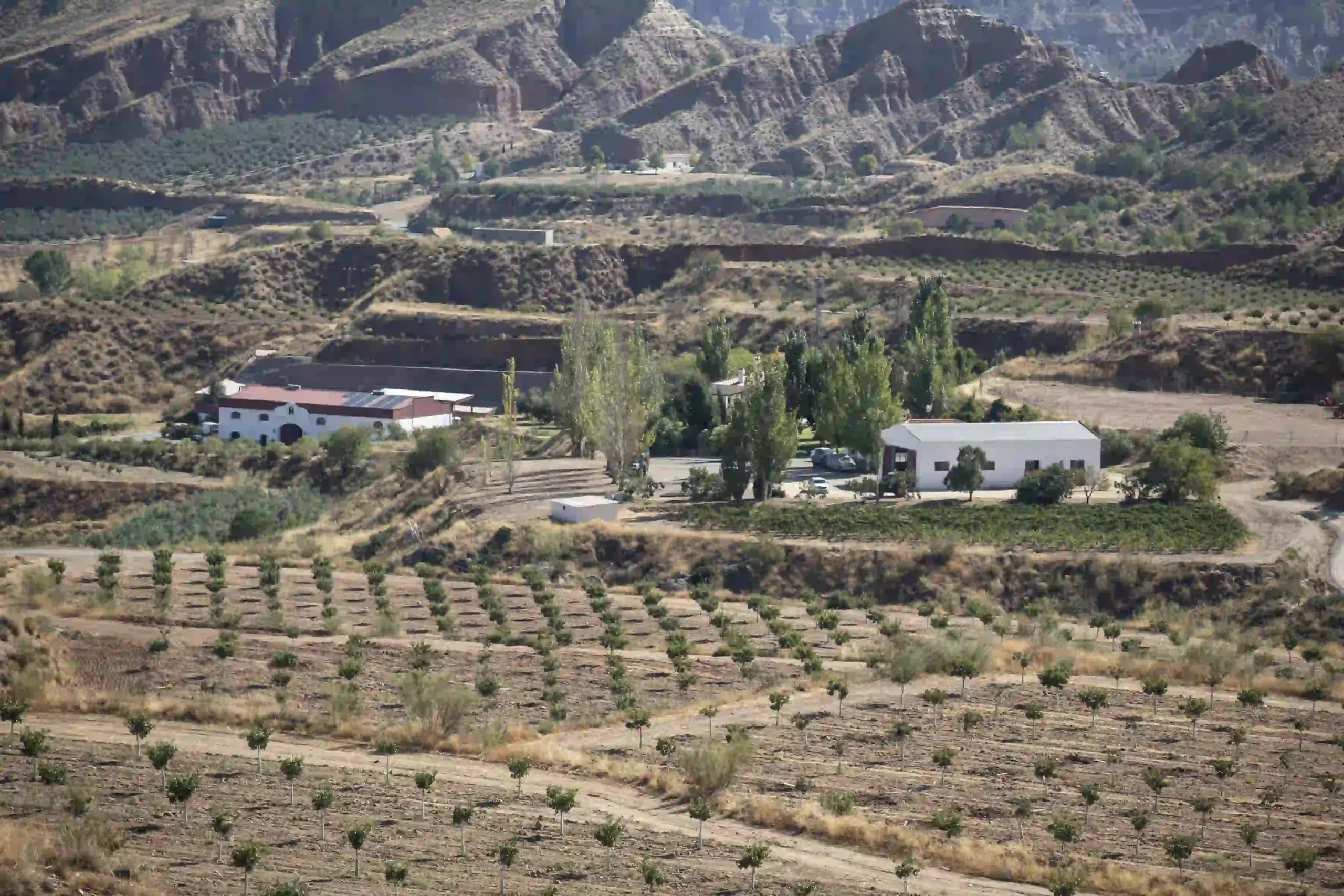
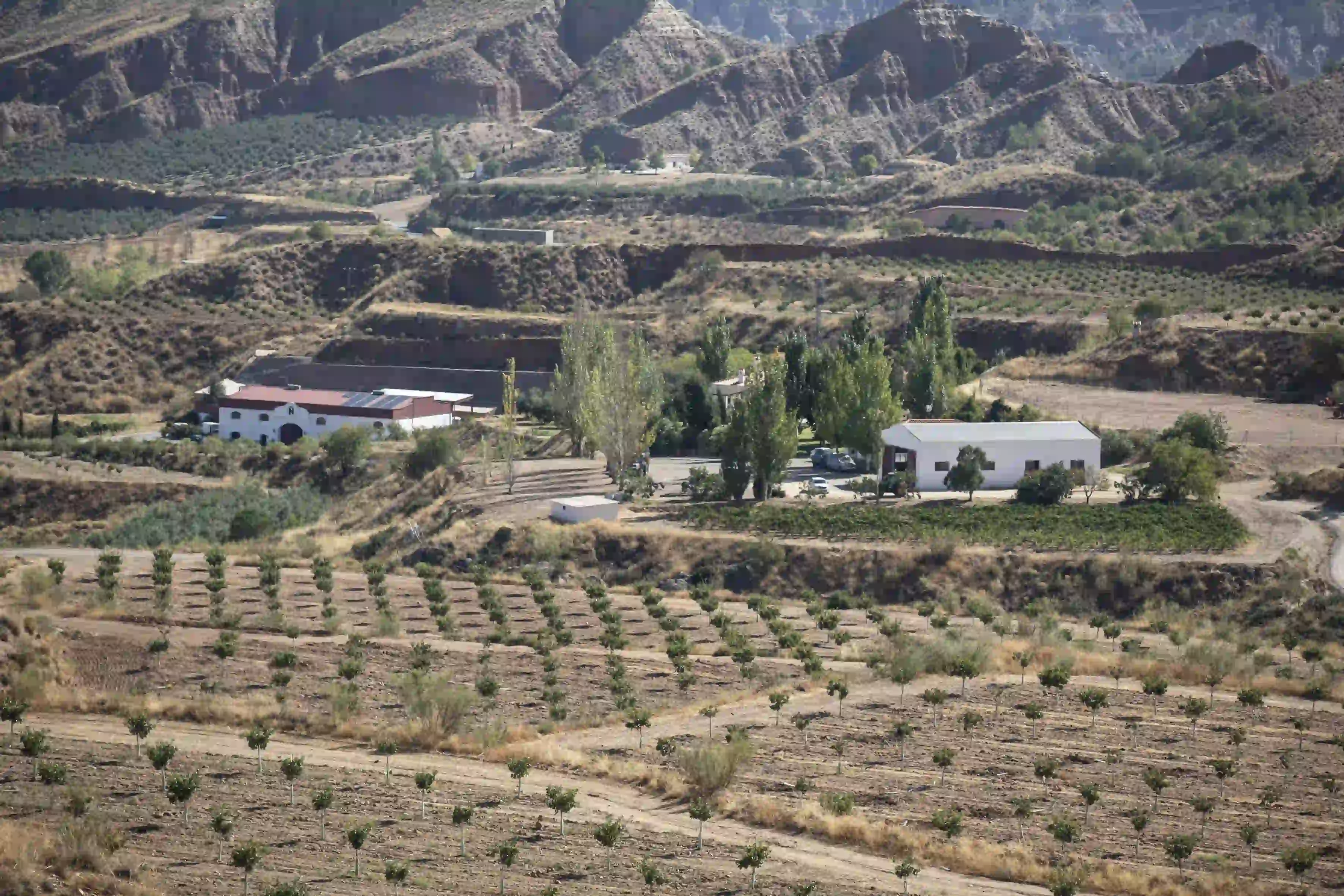
The vineyards of Bodegas Muñana, at over 1,100 meters in Sierra Nevada, produce a Syrah with a distinctly European profile and high altitudeCloser to the elegant style of the Northern Rhône than to the powerful Australian Shiraz. Violet and pepper in the foreground, fresh dark fruit, taut tannins that round out with time in oak, and that mountain freshness that makes the wine more vibrant and longer on the palate.
To understand why altitude has such a dramatic effect on the character of the grape, we recommend our article on What is wine terroir?, where we explain in detail how the soil, climate and altitude are expressed in each bottle.
The historical birthplace of Syrah. In appellations such as Hermitage, Côte-Rôtie and Crozes-Hermitage It produces some of the most elegant, long-lived, and sought-after wines in the world. A fresh, spicy style with pronounced floral notes of violet and an acidity that allows for decades of aging.
Here, Syrah is called Shiraz And it produces the opposite style: dense, warm wines with plenty of ripe fruit, chocolate, eucalyptus, and high alcohol content. These are the most well-known Syrahs globally for their approachability and robust character.
Spanish Syrah is gaining increasing presence and personality. The mountain areas —Jumilla, Priorat, Granada— They produce Syrah with an intermediate profile: fresher than the Australians, with more body than the Northern French. A distinctive style that is gaining international recognition.
Three countries where Syrah grows with enormous potential. South Africa produces highly elegant Syrah in cool areas like Swartland; Chile and Argentina cultivate it with excellent results in their Andean highlands.
Syrah is a generous grape at the table as well. Its structure, aromatic intensity, and smooth tannins make it versatile for a wide variety of pairings:
Grilled red meats → Its dark fruit and smoky notes blend with the grilled flavors
Roast lamb → Classic Rhône pairing; the pepper and violet notes of the Syrah perfectly complement the flavor of the lamb
Big game → Wild boar, deer, stag: the intensity of the hunt calls for the depth and animal notes of Syrah
Iberian sausages and charcuterie → Especially with chorizo, black pudding and cured pork loin
Cured cheeses → Aged Manchego, cured goat cheeses, soft blue cheeses
Spiced cuisine → Middle Eastern spices, mild curry, and ras el hanout pair surprisingly well with the peppery and licorice notes of Syrah
To learn more about pairing structured red wines with the most representative dishes of Spanish cuisine, you can consult our guide to Wine and Andalusian gastronomy pairing.
In our winery, we cultivate three main red grape varieties in the vineyards of Sierra Nevada: Syrah, Cabernet Sauvignon, and Petit Verdot. Each has its own distinct character, and together or separately they make up our range of high-altitude red wines.
You can learn more about the other two varieties in our articles about the characteristics of the Cabernet grape and the characteristics of the Petit Verdot grape.
He Muñana 1188 Syrah It is the most direct expression of everything we have described: a high mountain Syrah grown in vineyards at over 1,100 meters altitude in the foothills of Sierra Nevada, with its unmistakable signature of violet and black pepper, its fresh dark fruit —never dried out or hot— and its taut tannins that are rounded out by aging in oak barrels without losing that mountain tension that makes them unique.
This is a wine to be savored slowly, preferably in a Bordeaux glass, with a little time in the decanter to allow it to open up. If you'd like to learn more about how to get the most out of it, we recommend our guide on How to decant wine and our guide to types of wine glass.
The greatness of Syrah lies in its ability to be two things at once: bold and elegant, powerful and fresh, spicy and floral. Few wines offer so much in a single sip, and few varieties respond so dramatically and fascinatingly to their terroir.
In the Sierra Nevada mountains, at over 1,100 meters, Syrah finds the ideal conditions to express its most elegant character: less heat, more tension, higher acidity, and more nuanced flavors. The result is a wine unlike any other Spanish Syrah, imprinting the unique landscape of Andalusia's highest vineyards in every glass.
 Spanish Spanish
 English
 Chinese
Puedes realizar tus pedidos con normalidad hasta el 31 de julio.
Durante estas fechas no será posible tramitar pedidos. Volveremos a estar operativos el 16 de agosto.