



You look at two bottles of the same wine, from the same winery, with the same label. Everything is identical except for one number: the year. One says 2021, the other 2022. Does that difference matter? Is it worth choosing one over the other? Or is it just a detail for experts?
The vintage is one of the most important concepts in the world of wine and, at the same time, one of the most underestimated by those approaching it for the first time. Understanding it doesn't just help you buy better: it radically changes the way you enjoy and describe what's in your glass.
La añada (del latín annata, año) es simplemente el año en que se recogió la uva con la que se elaboró el vino. Ese número que aparece en la etiqueta de casi todas las botellas no es decorativo: es la referencia directa a las condiciones climáticas que vivió el viñedo durante ese ciclo agrícola completo —desde la brotación de la vid en primavera hasta la vendimia en otoño— y que quedaron impresas para siempre en la uva y, por tanto, en el vino.
Put another way: the vintage is the fingerprint of time on the wine. Just like two olive oil harvests from the same olive tree are not identical if the rainfall that year was different, two wines from the same vineyard and the same winery can be radically different if the weather conditions of those years were different.
The grapevine is an extraordinarily sensitive plant to its environment. Unlike many industrial crops that can be controlled and standardized, wine grapes are cultivated precisely to express their conditions of origin, not to eliminate them.
During the annual growth cycle, several critical moments determine the quality of the harvest:
Late spring frosts can destroy newborn shoots and drastically reduce the harvest. A long, rainy flowering period hinders fertilization and causes a phenomenon called shatter (or coulure)—where some flowers fail to turn into berries. This reduces yield but can sometimes improve the concentration of the surviving grapes.
This is the most critical period. The balance between daytime heat and nighttime coolness determines the speed at which the grapes ripen:
Very hot summers: Rapid ripening, grapes with high sugar content (higher potential alcohol) but lower acidity; warmer, fruitier aromas and less freshness.
Cool summers with high diurnal temperature variation (temperature swings): Slow and progressive ripening; the grape develops greater aromatic complexity, better preserves its natural acidity, and its phenolic compounds mature more harmoniously.
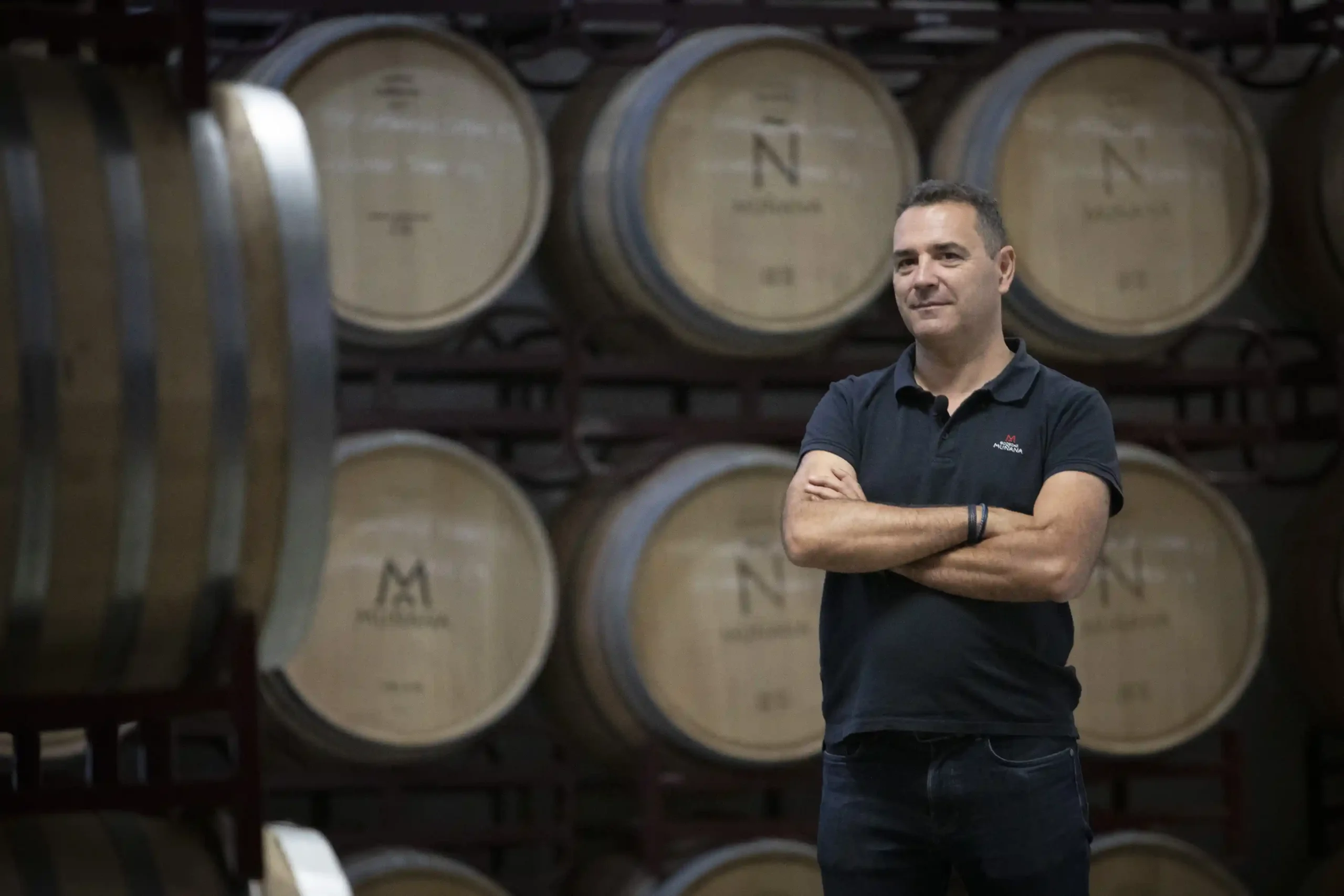
In the vineyards of Bodegas Muñana, located at over 1,100 meters in the Sierra Nevada, the diurnal temperature variation (the huge difference between day and night temperatures) is structurally high every year. Yet, within that constant, each year has its own nuances: a summer with particularly cold nights produces wines with more tension and elegance, while a dry and luminous summer yields more concentrated aromas and fruit.
Rains in the period leading up to harvest are one of the greatest risks to quality: they can dilute the grape's sugars and aromas, cause botrytis (a fungus that rots the clusters), and force harvesting before optimal ripeness. On the contrary, a dry, sunny autumn with cool nights is the ideal condition for the grapes to reach harvest in perfect condition and with maximum concentration.
In the wine world, people usually talk about "good," "average," or "exceptional" vintages. These ratings are neither subjective nor arbitrary: they are based on the analysis of the year's weather conditions and, above all, on the actual quality of the wine produced once it has been evaluated.
Vintage ratings are issued by:
Regulatory Councils of Designations of Origin (Consejos Reguladores): They rate the harvest of their specific region using numerical scales or adjectives (excellent, very good, good, average, poor).
Critics and specialized publications: Wine Spectator, Robert Parker, Decanter, Guía Peñín in Spain…
The wineries themselves: Many boutique or single-estate wineries only produce their most ambitious flagship wines in years they consider exceptional.
An exceptional vintage usually meets the following conditions:
Winter with sufficient rainfall to recharge the soil's water reserves.
Spring without late frosts, allowing for uniform budbreak.
Warm but not extreme summer, with cool nights that preserve acidity.
Dry and luminous autumn until the harvest, allowing the grapes to ripen fully without rainfall that would dilute them.
*Harvesting at the exact right moment: Neither too early (green, underripe grapes) nor too late (raisined grapes with a loss of acidity).
The importance of the vintage is not the same for all wines. It depends largely on the type of wine and its aging potential:
For a young wine meant to be drunk within the current or following two years, the vintage matters relatively little: if the winery maintains strict standards, they will always select grapes of sufficient quality for their entry-level range, regardless of the year.
Aquí la añada es fundamental. Un tinto de reserva de una gran añada puede evolucionar en botella durante 15 o 20 años, ganando complejidad con el tiempo. El mismo vino de una añada mediocre puede resultar plano y de corta vida incluso antes de llegar a su «ventana óptima». Como explicamos en nuestra guía sobre Differences between crianza, reserva and gran reserva, los grandes reservas solo se producen en los mejores años.
Great champagnes and cavas are divided into two categories based on the vintage:
Non-Vintage (NV): A blend of wines from multiple years designed to achieve a consistent house style year after year. This is the standard practice for the vast majority of champagnes.
Vintage: Crafted exclusively with grapes from an exceptional single year; it is only produced in the finest vintages and features the year on the label. These are the most highly valued and longest-lived champagnes and cavas. Our article on what sparkling wine is explains these differences in detail.
Some vintages have been permanently etched into the collective memory of the global wine world for producing wines of unprecedented quality and longevity:
1961 (Bordeaux): Considered by many to be the finest Bordeaux vintage of the 20th century; when its wines appear at auction, they fetch astronomical prices.
1982 (Bordeaux): The vintage that catapulted Robert Parker to international fame and redefined the style of modern wine; Château Pétrus and the Bordeaux First Growths (*premiers crus*) from this year remain legendary benchmarks.
1994 and 2004 (Ribera del Duero): Two of the most highly rated vintages in this Spanish appellation, producing benchmark, historically significant bottles of Vega Sicilia Único and Pingus.
2001 (Rioja): One of the finest vintages in the modern history of La Rioja, producing wines of superb structure and outstanding aging potential.
2010 (Multiple regions): An extraordinary year across almost all of Europe, particularly in Bordeaux, Burgundy, Rioja, and Ribera del Duero.
In high-altitude vineyards like those of Bodegas Muñana, the vintage carries an especially significant weight. This is because the mountain environment amplifies the climate differences between years: in a warm, uniform climate vineyard, year-to-year variations are less pronounced because the heat compensates for many shortfalls. In the mountains, however, each year is strikingly different from the last because climate factors fluctuate with much greater amplitude.
A year with a late harvest in Sierra Nevada, featuring especially cold nights in September, produces wines with a tension and acidity that a warmer, earlier year simply cannot achieve. This variability is an integral part of the character and appeal of boutique mountain wines.
As we explain in our article on what wine terroir is, altitude is not just a number: it is a set of climatic conditions that express themselves differently each year, giving every vintage its own unique personality within an always recognizable, foundational character.
Not all wines feature a year on the label. There are several types of wine that are intentionally crafted without a declared vintage:
Non-Vintage (NV) Champagnes and Cavas: As mentioned, these blend wines from multiple years to guarantee consistency.
* **Sherry Wines (Vinos de Jerez):** The traditional **solera** system used in Sherry production involves a continuous blending of wines from multiple years. In this system, the concept of a single vintage is mostly irrelevant because the final wine is always a structured blend of many different harvests.
Fortified and Liqueur Wines: Many Ports, Madeiras, and similar styles are crafted using complex blends of multiple vintages to balance richness and maturity.
Winery Assemblages (House Blends): Some wineries consciously choose to omit the vintage year to prevent consumers from rejecting a bottle simply because they are unfamiliar with whether that specific year was considered good or bad.
For the everyday consumer, knowing the vintage is particularly useful in these situations:
If you are buying a *crianza* or *reserva* red wine with the intention of cellaring it for several years, the vintage is absolutely essential. Check the official ratings from the *denominación de origen* or consult a trusted wine guide before making your purchase.
On a restaurant wine list, the vintage can mark a significant difference between two bottles of the exact same wine. Don't hesitate to ask the sommelier which of the available vintages is currently drinking at its peak.
It is common for the exact same wine to cost more or less depending on the vintage. A major price difference between two consecutive years of the same label usually reflects a real difference in quality, aging potential, or market demand.
When receiving wine as a gift: If you receive a wine with a vintage on the label that matches a special date in your life—such as the year of your wedding or a milestone birthday—the sentimental value adds a meaningful dimension to the gift that goes far beyond the liquid inside. As we explain in our guide on how to choose a wine as a gift, a special vintage can transform a bottle into a lifelong memory.
Every bottle of wine with a vintage on its label is, in a way, a climate archive: it preserves the memory of what that specific summer, spring, and autumn were like in a particular corner of the world. Great wines from exceptional vintages are not just excellent beverages—they are documents of an unrepeatable moment in time, beautifully crystallized in glass.
At Bodegas Muñana, every single vintage from our Sierra Nevada vineyards tells its own unique story. Our extreme altitude amplifies these natural variations, while the mineral-rich soil faithfully records each season's character. Exploring our collection year by year allows you to follow the fascinating story of how the mountain responds to time, one bottle at a time.
Discover our current selection in our online wine shop and, if you would like to experience firsthand the vineyard where each vintage comes to life, we look forward to welcoming you on our wine tourism visit in Granada.
 Spanish Spanish
 English
 Chinese
Puedes realizar tus pedidos con normalidad hasta el 31 de julio.
Durante estas fechas no será posible tramitar pedidos. Volveremos a estar operativos el 16 de agosto.