


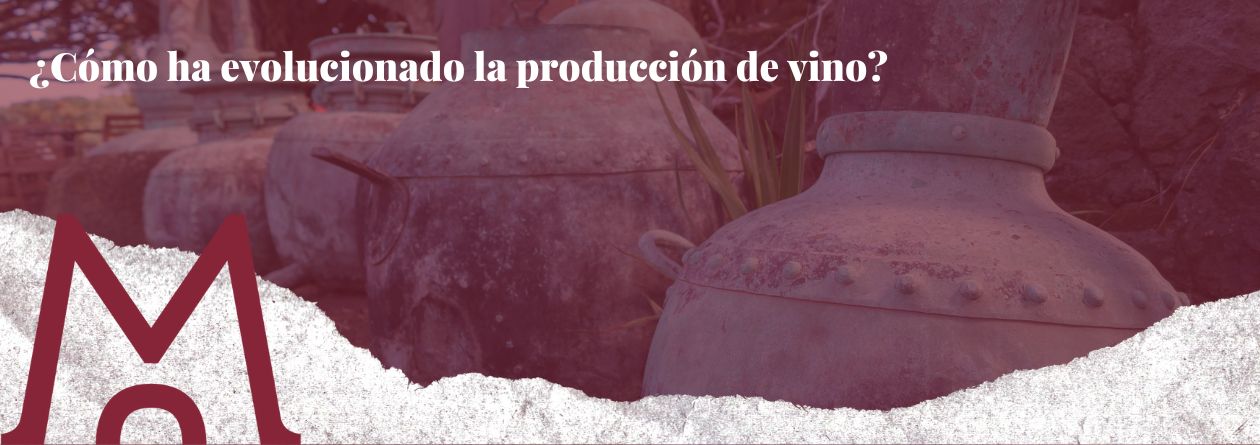
Wine has been an important beverage since ancient times, and wine production and consumption It has been closely linked to the history and culture of many regions of the world. Over the years, its form has changed. process the grapesfermentation, storage… to obtain today a production of high-quality table wine.
Wine has played an important role in human culture since ancient times. In antiquity, it was produced in regions such as Greece, Rome, and Egypt, where it was considered an essential element of daily life and was used in religion, medicine, and trade. wine production in antiquity It focused on the production of a table beverage of variable quality, which was handcrafted and varied in taste and quality depending on the weather conditions and the skill of the producer.

Some of the highlights of the Wine production and consumption in antiquity include:
During the Middle Ages, the wine production It continued to evolve in Europe, especially in France, Spain, and Italy. During this period, monks played an important role in the wine production and developmentusing it as a source of income for their monasteries and as an essential element in religious practices.
In the 6th century, Benedictine monks established monasteries and vineyards in France and other European countries. These monks were experts in the wine production and preservation, and his knowledge and techniques helped to improve the quality of wine produced in Europe.
On the other hand, it was linked to monarchies, since it was used at the tables of kings and feudal lords, as well as in religious rituals. During the Middle Ages, feudal lords and cities established Laws and rules to regulate the production and trade of wineFor example, rules were established for classifying wines according to their quality and for protecting wine regions against counterfeit wines.
In general, the wine production in the Middle Ages It was focused on obtaining quality wine for local consumption and for long-distance trade. Winemaking centered on red wines and fortified red winesWines like Port and Sherry were produced using techniques such as controlled fermentation and oak barrels to improve quality and flavor. White and sweet wines were also produced.

During the Renaissance, wine played an important role in European culture and society. From the 15th century onward, it became a luxury item and was used at social and political events, as well as at the tables of the wealthy. There was an increase in both the production and variety of wines available, with the introduction of new grape varieties and winemaking techniquesFurthermore, trade between Europe and other continents also allowed for the introduction of exotic and foreign wines.
However, the quality of wine during this period was uncertain, and various chemicals and additives were used to enhance its flavor and appearance. For this reason, Renaissance wine drinkers exercised great caution and often mixed their wine with water to dilute it and avoid the negative effects of the additives.
The Modern Age saw a revolution in wine productionwhich had a significant impact on the wine industry and how wine was consumed. Some of the most important changes include:

The wine production today It is a global industry with a greater diversity of styles and prices. Some regions, such as France, Italy, and Spain, remain the leaders in the production of high-quality wines There is a high demand for their products, but there are also new emerging producing regions, such as Australia, the United States, Argentina, Chile, and South Africa.
Winemaking has been modernized and improved in terms of efficiency and sustainability. With greater use of technology and environmentally friendly farming practices, high-quality wines are achieved. Furthermore, wine industry today It has evolved to meet the growing demands of consumers; we can taste everything from conventional wines to organic, sulfite-free, and vegan wines.
Regarding wine markets, demand has increased worldwide, with greater acceptance of wines from different countries and regions. Furthermore, online wine trading has experienced a significant increase, with the popularity of online wine shops and new tourism concepts focused on increasing the importance of this beverage.
 Spanish Spanish
 English
 Chinese
Puedes realizar tus pedidos con normalidad hasta el 31 de julio.
Durante estas fechas no será posible tramitar pedidos. Volveremos a estar operativos el 16 de agosto.